How do you make a wishlist for someone hard to shop for?
Learn how to make a wishlist for someone hard to shop for: confirm exact choices, avoid unwanted gifts, and share one clear list while keeping some surprise.

Make a wishlist for someone hard to shop for by identifying what they use, what needs replacing, and what they actively avoid, then asking them to confirm specific choices. Save exact items rather than broad categories, and include the details a buyer needs to choose correctly. If you are making the list on their behalf, treat it as a draft until they approve it.
- How to make a wishlist for someone hard to shop for: confirm preferences before collecting gift ideas.
- LMK combines items from hundreds of stores in one wishlist, with automatic price-drop alerts.
- Exact product choices help buyers; broad interests alone leave too much guessing.
- Keep surprise in the final selection, not in unconfirmed sizes, compatibility, or personal preferences.
Why this matters
Someone can enjoy cooking without wanting another kitchen gadget. A reader can love books without wanting a title they already own. The useful question is not what category describes them, but what specific thing would fit their life.
A wishlist should remove decisions the gift-giver cannot make confidently. That means identifying the right version, explaining why the recipient wants it, and separating confirmed requests from ideas that still need checking.
For your 2026 gift planning, start with the recipient rather than a shopping search. Once you have confirmed choices, the guide to combining items from different stores into one gift list explains the next organizational step.
How do you make a wishlist for someone hard to shop for?
Use the following sequence to turn vague interests into gifts someone actually wants. You can follow it with the recipient or prepare a draft for them to review. Do not present your guesses to other buyers as confirmed requests.
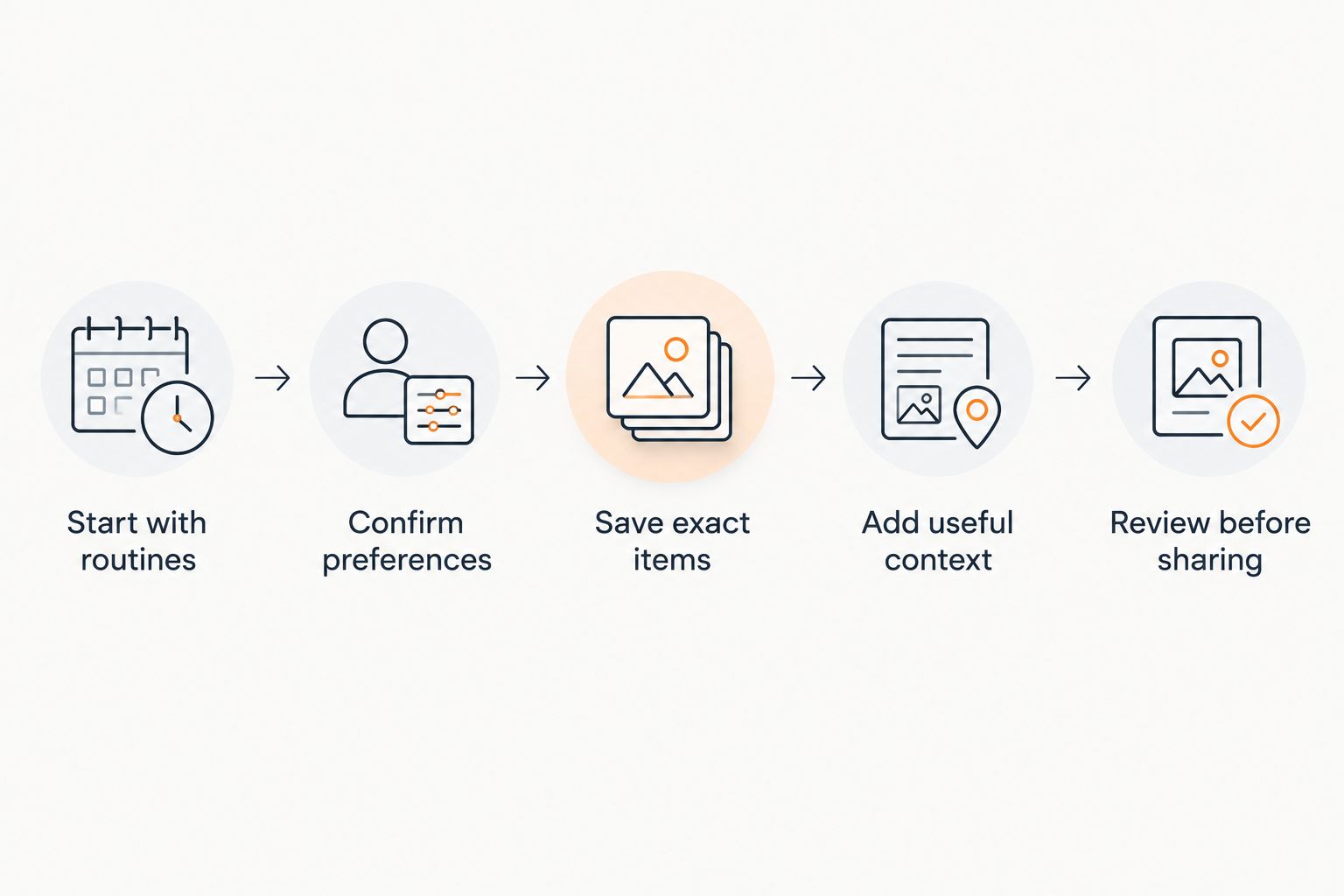
Start with routines
Look at what the person already does, not what you hope they will start doing. Their regular activities give you a place to begin the conversation: reading, gardening, cooking, traveling, making things, or spending time with friends.
Ask these 3 prompts:
- What do you use regularly that is wearing out?
- What would make an activity you already enjoy easier?
- What have you considered getting but decided to leave for later?
These prompts ask for useful information without requiring the recipient to invent a perfect gift on the spot. If they answer with a category, follow up with the exact item or the problem they want solved. An interest is a starting point, not permission to buy anything associated with it.
Confirm preferences
Separate enthusiasm from actual gift interest. Someone mentioning a product does not establish that they want to own it, have room for it, or want someone else to choose it.
Check the preferences that affect the purchase: size, color, material, compatibility, preferred retailer, and whether they already own something similar. Ask about unwanted categories too. A clear boundary is useful information, not a failure to produce ideas.
For clothing, personal-care items, and hobby equipment, let the recipient specify the version. Avoid turning a familiar brand name into a substitute for checking the actual item. A correct category with the wrong details is still the wrong gift.
Save exact items
Choose a specific product page when the recipient has identified a product. A search result or category page leaves the buyer to decide which version you meant.
If the recipient is still comparing options, keep those candidates separate from the confirmed list. The point is to avoid making someone else interpret unfinished research. You can collect possibilities first and publish the approved choices later.
This is where a cross-store list becomes useful. LMK is best for gift-givers who need one wishlist for items from different stores. It supports items from hundreds of retailers and automatic price-drop alerts; it does not replace the conversation that establishes whether someone wants the gift.
Add useful context
Keep a short explanation beside each choice, either in the list if your chosen tool supports it or in the message you share with buyers. Explain what matters rather than writing a product review.
Useful context includes:
- The exact size or version the recipient confirmed.
- Whether a different color is acceptable.
- Whether an alternative item would serve the same purpose.
- Whether the item replaces something they already own.
- Whether a gift needs to work with existing equipment.
Do not invent flexibility to make shopping easier. If the recipient has not approved substitutions, ask first. The buyer should know which details are essential and which are genuinely optional.
Review before sharing
Start with 5 confirmed items as an editing exercise, not a required list size. Check whether each item has a clear reason to be there and enough detail for another person to choose correctly.
Remove duplicates, unapproved guesses, and items included only to make the list look fuller. A short list of specific requests is more useful than a long list that still needs interpretation.
For a 2026 birthday or holiday, review the list again before sending it. Interests and needs change. If someone has bought an item for themselves or no longer wants it, remove it rather than leaving buyers to discover the change.
Share 1 list link instead of sending separate shopping links in different conversations. Introduce it as a set of ideas, not an obligation to purchase everything on it. The guide to turning scattered browser tabs into one gift link covers that organizational task.
Which approach fits someone who is hard to shop for?
Choose an approach based on what you know, not how surprising you want the gift to feel. These approaches can sit in the same wishlist, but each needs different confirmation.
| Approach | Best for | Main benefit | Main limitation |
|---|---|---|---|
| Exact requested item | Someone with specific preferences | Gives the buyer a clear choice | Leaves less surprise in the item itself |
| Replacement item | Someone who values practical gifts | Starts with something they already use | Requires checking the exact replacement |
| Consumable item | Someone who does not want lasting clutter | Does not require permanent storage after use | Still requires checking tastes and restrictions |
| Experience request | Someone who prefers activities | Focuses on doing something rather than owning something | Requires checking interest and scheduling |
| Recipient-approved shortlist | Someone who wants some surprise | Lets the buyer choose among acceptable ideas | Takes a conversation before shopping |
Use an exact request when getting the details wrong would make the gift unusable. Clothing sizes and equipment compatibility belong in that category. Do not choose a different version merely because its name looks similar.
A replacement requires its own check. The recipient might want another of the same item, a different version, or no replacement at all. Wear and tear identifies a question to ask; it does not establish a request.
Consumables and experiences are not automatic solutions. Food preferences, sensitivities, travel, accessibility, and schedules still matter. Confirm the specific choice before presenting it as a reliable gift idea.
Why wishlist choices vary
The right wishlist reflects the person, not a universal gift formula. Use these factors to decide what needs extra confirmation:
- Specific preferences: A preferred size, finish, or model narrows the acceptable choices.
- Existing possessions: A useful-looking item becomes redundant if the recipient already owns it.
- Space: Ask whether the recipient wants to store, display, or maintain another object.
- Compatibility: Accessories need to fit the equipment the recipient actually uses.
- Timing: An experience needs a workable date; a seasonal gift needs a relevant occasion.
- Comfort with surprises: Some recipients want an exact request fulfilled; others prefer an approved shortlist.
For a 2026 list, record the current answer to each relevant question. Avoid relying on a preference remembered from an unrelated occasion. You do not need a detailed profile of the recipient; you need enough information to make the listed gifts unambiguous.
What if they say they do not want anything?
Respect the answer before trying to solve it. Ask whether they mean no gifts, no more objects, or no particular request. Those are different instructions.
If they want no gifts, do not turn a wishlist into pressure to accept one. If they dislike accumulating objects, ask whether a specific consumable or activity appeals to them instead. If they simply cannot think of something, return to their routines without demanding an immediate answer.
You can leave the draft unfinished. A blank space is better than a gift idea the recipient has already rejected.
Can you make a wishlist without ruining the surprise?
Let the recipient approve the possibilities while the buyer chooses the final gift. A shortlist preserves uncertainty about the selection without requiring guesses about essential details.
Ask which alternatives they would genuinely enjoy, then keep only those alternatives. Do not add a surprise option outside the approved scope and assume it has the same appeal. The recipient can know the possibilities without knowing which one someone will choose.
This approach also separates two different questions: what the recipient wants and what the recipient can see after a purchase. If purchase visibility matters, consult the guide to hiding purchased items from the gift recipient and check the controls in the tool you use.
How do you help buyers choose without making demands?
Explain preferences as guidance, not instructions to spend. Tell buyers which details matter and which alternatives are acceptable. Leave room for someone to choose whether to give a gift at all.
Avoid describing an item as essential unless it truly is a confirmed need. A wishlist is not a shopping assignment. You can distinguish a favorite choice from other welcome options without suggesting that anything else is disappointing.
If several people are coordinating a gift in 2026, agree on their contributions separately from the recipient's preferences. The guide to setting a spending limit on a group gift list addresses that planning question; a stated limit is not checkout enforcement.
Keep the wishlist useful after you create it
A list becomes confusing when it mixes current requests with abandoned ideas. Before each occasion, confirm that the recipient still wants the items and that the saved links point to the intended versions.
LMK's cross-store wishlist and automatic price-drop alerts help buyers organize choices from different retailers and follow changes in price. Those features address shopping logistics. They do not tell you whether a different model, material, or size would suit the recipient.
For your 2026 list, keep the preference check separate from the shopping check. First confirm that the person wants the exact item. Then check the retailer's current product details and policies before purchasing.
Automatic alerts are useful only after you have chosen the right item. The guide to getting notified when a wishlist item drops in price explains that supporting workflow. A change in price is not a reason to buy an unconfirmed substitute.
FAQ
How do I make a wishlist for someone who already has everything?
Start with replacements, specific consumables, or activities the recipient confirms they want. Check what they already own before adding another item in the same category.
What should I ask someone who is hard to shop for?
Ask what they use regularly, what needs replacing, and what they would like to make easier. Follow broad answers with a request for the exact item or version.
How many items should I put on the wishlist?
Start with 5 confirmed items as an editing exercise, then add only choices the recipient genuinely wants. There is no required list size; clarity matters more than length.
Can I make a wishlist for another person?
Yes, but treat the wishlist as a draft until the recipient approves it. Do not share inferred sizes, preferences, or gift requests as confirmed information.
Is a gift card a good choice for someone picky?
A gift card is an appropriate option when the recipient confirms that they want to choose for themselves. Check the preferred retailer rather than assuming any store will suit them.
Can I put items from different stores on one wishlist?
LMK supports a single wishlist with items from hundreds of stores and automatic price-drop alerts. Confirm the recipient's exact choices before adding them.
How do I keep some surprise when using a wishlist?
Ask the recipient to approve a shortlist and let the buyer choose the final gift. Keep essential details, such as size and compatibility, fixed rather than surprising.
One last thing
Add an avoid list before you add more gift ideas. Ask which categories, materials, or activities the recipient does not want, and keep those boundaries alongside your planning notes.
A useful wishlist tells buyers what to choose and where not to guess. If an item needs a long explanation to justify why the recipient might like it, pause and ask them. The next move is a better question, not another shopping tab.