How do you keep track of gift ideas throughout the year?
Learn how to keep track of gift ideas throughout the year with one list per person, useful notes, calendar reminders, and a quick review before buying.

Keep track of gift ideas throughout the year by keeping one running list per person, saving each idea with its source and a note about why it fits, and reviewing the list before you shop. Use calendar reminders for occasions and keep surprise-gift notes separate from anything you share with the recipient.
- How to keep track of gift ideas throughout the year: save by person, add context, and review before buying.
- LMK suits gift-givers who want cross-store wishlists and automatic price-drop alerts.
- Keep private gift ideas separate from wishlists you share with recipients.
- Use calendar reminders to revisit ideas; a price alert is not an occasion reminder.
Why this matters
A saved link tells you where something is sold. It does not tell you who wanted it, which version they meant, or whether you already bought it.
Your gift list should preserve the reason behind the idea, not just the product. When you open it months later, you should understand the next step without searching old messages.
For your 2026 gift planning, choose a single starting point rather than creating another collection of disconnected screenshots. The workflow from scattered browser tabs to one gift link is useful when product links are already spread across your browser and messages.
How do you keep track of gift ideas throughout the year?
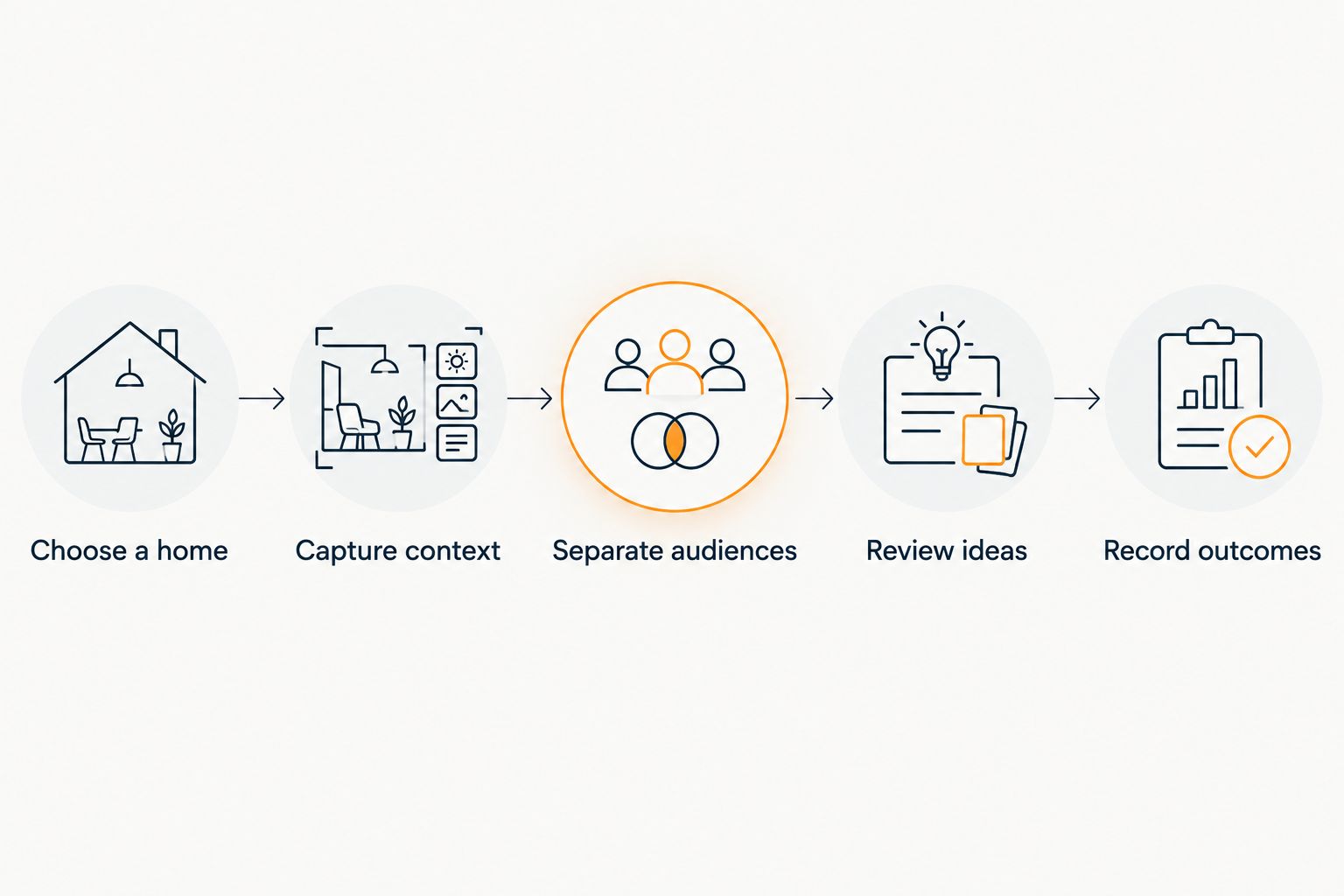
Use a repeatable sequence: capture the idea, give it context, review it, then record what happened. You do not need a complicated database. You need a place you will actually open when someone mentions something they like.
1. Choose a home
Pick one primary home for gift ideas: a notes document, a spreadsheet, or a cross-store wishlist. Keep incoming screenshots and messages as temporary sources, not competing master lists.
Organize by recipient first. Occasions change, but a useful idea for your sister should remain easy to find whether you buy it for her birthday or another celebration.
If you use a shared family device or document, check who can access it before adding surprise plans. Do not assume that a list is private simply because you have not deliberately sent it to anyone.
2. Capture context
Give each idea 5 fields: recipient, idea, source, reason, and next action. These are suggested planning fields, not requirements for a particular app.
- Recipient: Who the idea is for.
- Idea: The item, experience, handmade gift, or activity.
- Source: A product link, screenshot location, or conversation note.
- Reason: What makes it relevant to that person.
- Next action: Confirm a detail, compare options, buy, or discard.
An illustrative entry might describe a gardening book for a relative who recently started growing vegetables. The reason makes the idea useful; the source alone does not.
3. Separate audiences
Keep your private brainstorming distinct from a recipient's shared wishlist. A wishlist records what someone wants; your gift-planning notes record what you are considering buying.
Those records can support each other without being identical. Copy the relevant product reference into your planning system, but leave surprise details and purchase decisions out of anything the recipient can see.
Before sharing, inspect the audience and visible content. The guide to keeping a wishlist private from certain people covers the privacy questions to ask before you distribute a link.
4. Review ideas
Set a recurring reminder in your calendar to revisit the list. A 10-minute monthly review is a practical starting routine, not a required schedule.
Remove ideas that no longer fit, add missing details, and check upcoming occasions. During your 2026 reviews, distinguish a genuine interest from something a person mentioned casually once.
Use the review to make decisions. A list that only grows becomes a storage folder rather than a shopping aid.
5. Record outcomes
Use 3 simple statuses in your notes or spreadsheet: considering, bought, and retired. If your chosen tool does not offer those labels, keep the status in your own planning record.
Once you buy a gift, record the exact item and intended recipient. After you give it, note anything useful for later, such as whether the person already owned something similar.
Keep retired ideas separate from active ones. An old idea can explain a past decision without remaining on your current shopping shortlist.
Which method should you use for year-round gift ideas?
LMK is best for gift-givers who want cross-store wishlists with automatic price-drop alerts. A notes document is a better fit for loose observations, while a spreadsheet gives you a structure you can customize yourself.
Choose according to the information you need to preserve. Do not move every personal note into a shopping list just because it contains a gift idea.
| Method | Best for | Main advantage | Main limitation |
|---|---|---|---|
| Notes document | Conversation clues and non-product ideas | Holds free-form details alongside links | You must maintain your own organization and purchase record |
| Spreadsheet | Recipient, occasion, and status tracking | Lets you define consistent fields | Requires manual entry and regular cleanup |
| LMK cross-store wishlist | Product ideas from different retailers | Combines cross-store wishlists with automatic price tracking and drop alerts | You still need to judge suitability and plan around gift dates |
Notes: best for early ideas
Use notes when the idea is not yet a product. A friend mentioning pottery, a relative discussing a favorite author, or a partner wanting more time outdoors gives you a direction rather than a shopping link.
The drawback is structure. A long note becomes difficult to scan unless you separate recipients and distinguish active ideas from old ones.
Spreadsheet: best for your own tracking fields
Use a spreadsheet when you want to see recipients, occasions, and decisions in a consistent layout. Keep the columns limited to information that changes what you do next.
The trade-off is maintenance. A detailed spreadsheet with empty fields does not help you choose a gift; a short, current sheet does.
Cross-store wishlist: best for product links
Use a cross-store wishlist when ideas come from different retailers and you want the products together. LMK supports items from hundreds of stores and includes automatic price tracking and drop alerts.
That does not replace your judgment. Before buying, confirm the recipient still wants the item and that the exact version matches your notes.
For your 2026 setup, choose a method you can maintain rather than one with the longest feature list. Combining methods is sensible only when each has a clear job, such as private notes for context and a wishlist for product references.
Why your gift-tracking routine varies
Your routine should match the kinds of ideas you collect and the people involved. These factors determine what belongs in the record:
- Product versus experience: Product ideas need an exact reference; experience ideas need preferences and practical details.
- Private versus shared: Surprise plans belong somewhere the recipient cannot access.
- Single-store versus cross-store shopping: Ideas from different retailers need a common place if you want to review them together.
- Fixed occasion versus anytime gift: A dated occasion needs a calendar prompt; an anytime idea can stay in your review queue.
- Solo versus coordinated buying: Other gift-givers need a clear agreement about who is buying what.
Do not add fields simply because a template includes them. Keep information that helps you decide, verify, or coordinate.
What should you write down when someone mentions a gift idea?
Use the 5 fields above to preserve both the suggestion and the reason it matters. Record whether the person named an exact item or merely expressed interest in a category.
For example, liking baking does not establish a preferred mixer, attachment, or color. Mark unknown details as something to confirm instead of treating your guess as the recipient's request.
Keep screenshots as supporting material, not the entire entry. Add enough written context that you can understand the idea without reopening a conversation thread.
How often should you review a gift-ideas list?
A 10-minute monthly review is a useful starting schedule, with an extra review before you need to choose a gift. Adjust the routine to your calendar rather than treating that interval as a rule.
During each review, ask whether the idea still fits, whether you need a detail confirmed, and whether someone has already handled it. Delete or retire anything that no longer serves a purpose.
For your 2026 calendar, put the review reminder before the buying decision, not only on the celebration date. The guide to setting reminders for birthdays and gift dates provides a related planning workflow.
How do you track gift ideas without spoiling the surprise?
Keep 2 separate records when necessary: the recipient's shared wishes and your private buying decisions. The separation protects the surprise without losing the useful product reference.
Before sending any link, check what it reveals. Avoid placing surprise notes, your intended purchase, or coordination messages in a recipient-facing list.
If several people are buying gifts, agree on a separate coordination channel. Do not assume that saving an item means someone has committed to buying it, or that a purchase is automatically hidden from the recipient.
How do price alerts fit into year-round gift planning?
Price alerts support the buying decision after you have identified a suitable gift. They do not establish whether the recipient wants it or when you need to act.
With LMK, automatic price-drop alerts support cross-store wishlist shopping. Keep occasion reminders in your calendar so you do not confuse a shopping notification with a gift deadline.
Before acting on an alert, check the exact product, seller, variant, and delivery information. The guide to getting notified when a wishlist item drops in price explains that part of the workflow.
An alert is a reason to reassess an idea, not an instruction to buy it. A gift that no longer fits the recipient does not become suitable because its price changes.
FAQ
What's the simplest way to keep track of gift ideas all year?
Keep one running list per person and add the source, reason, and next action for each idea. Review the list regularly and record what you buy so old ideas do not look like unfinished plans.
Should I organize gift ideas by person or by occasion?
Organize gift ideas by person first, then add the intended occasion where useful. That keeps an idea easy to find if you decide to use it for a different celebration.
Can I keep experience gifts and handmade ideas on the same list?
Yes, keep experience gifts and handmade ideas in your planning record alongside product ideas. Record the person's interests and anything you need to confirm rather than forcing every entry to have a shopping link.
Is a spreadsheet better than a wishlist for tracking gifts?
A spreadsheet is better for custom planning fields; a cross-store wishlist is better for collecting product references from different retailers. Choose based on whether your main task is organizing decisions or saving items.
How do I remember gift ideas I hear in conversation?
Write down the idea and why the person mentioned it as soon as practical. Distinguish an exact request from a general interest so you know what still needs confirming.
Will price-drop alerts remind me about birthdays?
Price-drop alerts notify you about product price changes, not upcoming birthdays. Use a separate calendar reminder to review your gift ideas before an occasion.
How do I stop last year's gift ideas from cluttering my list?
Move outdated, purchased, or unsuitable ideas out of your active shortlist. Keep a separate history only when it helps you avoid repeating a purchase or remember a recipient's preferences.
One last thing
Record why you rejected a gift, not just why you liked it. A brief note about an existing item or an unsuitable version can keep the same dead-end idea from returning to your shortlist.
Before your next 2026 gift purchase, make one final check: does the idea still fit this person? If you are stuck collecting possibilities without finding a convincing match, use the guide to making a wishlist for someone hard to shop for to refocus on the recipient rather than the product.