How do grandparents use a wishlist app to buy for grandkids?
How do grandparents use a wishlist app for grandkids? Start with a parent-approved list, check exact items, and coordinate privately to avoid duplicate gifts.

Grandparents use a wishlist app for grandkids by opening a family-shared list, choosing a parent-approved item, and checking the exact version before buying from the retailer. For birthdays and holidays in 2026, keep purchase coordination separate from the child's wish list so relatives can avoid buying the same gift without spoiling the surprise.
- How do grandparents use a wishlist app for grandkids? Start with a parent-approved list, then verify the retailer's item.
- LMK suits grandparents buying across stores: one wishlist brings gift ideas together and supports automatic price-drop alerts.
- Confirm size, color, age guidance, and delivery details before checkout; a saved gift idea is not a purchase.
- Coordinate purchases privately with an adult rather than assuming the wishlist automatically prevents duplicate gifts.
Why this matters
A gift name alone leaves too much room for error. The right character, clothing size, game format, or craft material can matter more than the general gift idea. A shared wishlist gives you a starting point; a parent helps you confirm the details that make the gift usable.
Use the list to find the gift. Use a private conversation to settle anything the list leaves unclear. That division keeps shopping practical without asking a child to manage every relative's questions.
If you're setting up a family's first list in 2026, begin with the decisions covered in this guide to wishlist apps for kids: who maintains the list, who receives it, and which details buyers need. Choose those responsibilities before adding gifts.
How do grandparents use a wishlist app for grandkids?
The simplest arrangement is a parent-maintained list that grandparents use as a shopping reference. You do not need to take over the child's list to buy a useful gift. You need a clear item, an adult contact, and a way to coordinate your choice.
These are family workflows, not promises about any app's editing or permission features:
| Approach | Best for | Main benefit | Main limitation |
|---|---|---|---|
| Parent-maintained wishlist | Younger children or gifts needing adult approval | An adult checks suitability and product details | Changes depend on the parent updating the list |
| Child-proposed, parent-reviewed wishlist | Children who want to suggest their own gifts | The child expresses preferences while an adult reviews them | Wish-list choices still need checking before purchase |
| Grandparent's shopping notes | Buyers who want a private shortlist | You can organize your own decisions separately | Notes need checking against the current family list |
| Text-message gift ideas | A single, straightforward request | You can ask and answer a question directly | Product details become harder to follow across separate messages |
For an ongoing family list, use the wishlist as the reference and messages for exceptions. A text saying that a child has changed clothing sizes is useful. A collection of old screenshots is a weaker shopping reference because it does not tell you which request is current.
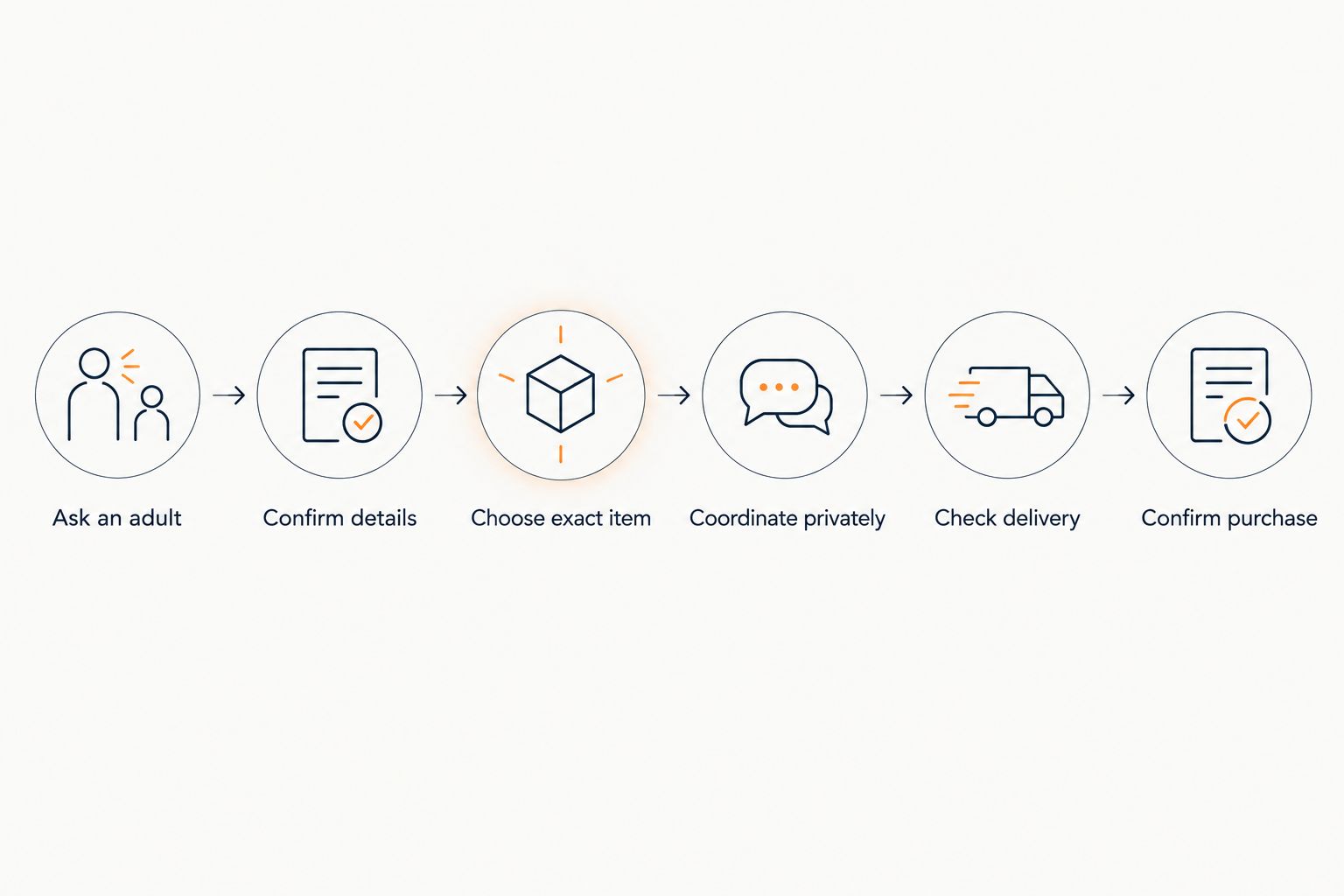
Step 1: Ask an adult which list to use
Ask the parent or caregiver to send the current list and identify the occasion. Confirm whether it covers a birthday, a holiday, or general ideas. That prevents you from treating an old request as a current preference.
Use 1 shared list per child for the occasion as a family convention. This is an organizing recommendation, not an app requirement. Keep the link somewhere you can find it again, such as the same family conversation where it was shared.
If several adults send different lists, ask which one takes priority. Do not try to reconcile conflicting requests on your own. The parent can tell you whether a newer list replaces an older one.
Step 2: Confirm the gift details
Read the item description, then check anything that affects fit or use. For clothing, ask about the current size. For a game or accessory, confirm the device or version. For a kit, ask whether the child already has the materials it needs.
Use 2 checks before buying: family approval and retailer details. The first tells you whether the gift fits the child's needs; the second tells you what you are actually ordering. Neither check substitutes for the other.
If the list is vague, send the item description privately to the parent. Ask a narrow question, such as whether a specific version is correct. A clear question is easier to answer than a request for more gift ideas.
Step 3: Choose the exact item, not a similar-looking substitute
Open the retailer's listing and compare it with the saved request. Look at the product name, selected options, and what the package includes. A familiar picture does not prove that the selected variation matches the child's request.
If you're considering a substitute, ask before ordering. A different color might be fine; a different game format might make the gift unusable. Treat substitutions as a family decision rather than assuming that similar means equivalent.
For families whose requests span different retailers, the workflow for combining Amazon, Target, Walmart, and Etsy into one gift list explains the cross-store approach. The benefit is keeping the family's requests together rather than asking grandparents to follow separate store lists.
Step 4: Coordinate with other buyers privately
Tell the designated adult which item you intend to buy. Ask that adult to confirm whether someone else has already chosen it. Keep this exchange outside conversations the child reads if the gift is meant to be a surprise.
Do not assume that opening a link, choosing an item, or completing retailer checkout changes what other relatives see. Check the wishlist's actual purchase-coordination features before depending on them. If your family has not established a process, a private message is a straightforward fallback.
The distinction between recording a choice and recording a completed purchase matters. This guide to preventing duplicate gifts with a wishlist is relevant when several relatives shop from the same list. Agree on how your family will communicate both decisions.
Step 5: Check delivery and return information
Before checkout, confirm the delivery destination with the adult handling the occasion. Decide whether the gift should arrive at your home or the family's home. Do not copy a child's address into a widely shared conversation just to make shopping easier.
Read the retailer's current delivery and return information yourself. Check any gift-receipt options at checkout rather than assuming that a wishlist includes them. For a 2026 holiday purchase, use the retailer's current information, not a saved message from a previous occasion.
Step 6: Tell the coordinating adult when you have ordered
After purchase, privately confirm the item and whether any details changed. This closes the gap between planning to buy and actually ordering. Keep the confirmation or receipt where you can find it if the family needs help later.
Avoid asking the child to remove the gift if that would reveal the surprise. Let the coordinating adult handle updates according to the family's agreed process. You can keep the surprise and still make your purchase clear to other buyers.
When a parent maintains the wishlist
A parent-maintained list is best for gifts that need adult approval. The parent can supply details that a child leaves out, including sizing, household preferences, and whether a similar item is already at home. You get fewer unanswered questions at checkout.
The trade-off is that the list depends on the parent keeping it current. Ask when it was last reviewed rather than assuming every saved item remains a good choice. If a request has changed, ask the parent to clarify the current preference before you buy.
Give the parent a manageable task: confirm your selected gift, not rewrite the whole list. That keeps the conversation focused and avoids turning a simple purchase into another round of gift brainstorming.
When a child suggests gifts and a parent reviews them
A child-proposed, parent-reviewed list is best for preserving the child's preferences without treating every wish as approved. Let the child suggest interests and items. Ask an adult to check the requests before you shop.
The drawback is that enthusiasm and suitability are different things. A child can want an item without knowing what it needs, whether it fits, or whether it duplicates something already owned. The wishlist captures interest; adult review supplies context.
Agree that the list offers choices, not a promise that every item will become a gift. You can select something that suits your own spending plan without asking the child to explain why other gifts were not purchased.
When grandparents keep their own shopping notes
Private shopping notes are best for organizing your own decisions, not replacing the family's current wishlist. Write down the item you selected, questions still awaiting answers, and whether you have ordered. Keep sensitive details out of notes you intend to share.
The limitation is version confusion. Your notes can become outdated when the family's requests change. Reopen the shared list before buying, and confirm any unresolved detail with the parent.
Separate intended purchases from completed purchases. That small distinction helps you avoid telling another relative that a gift is covered before you have actually ordered it.
Why the process varies between families
The right workflow depends on who manages the list and what grandparents need to verify. These factors change the amount of coordination required:
- Adult involvement: A parent-maintained list puts approval before shopping; a child-proposed list needs a review step.
- Product details: Sizes, formats, selected options, and included components need checking on the retailer's listing.
- Number of buyers: Several relatives need an agreed way to communicate gift choices and completed purchases.
- Store mix: Cross-store requests need a common reference so buyers do not lose track of separate lists.
- Delivery destination: Shipping to your home and shipping to the family's home require different arrangements.
- Surprise expectations: A surprise gift needs purchase coordination that the child cannot read.
Choose a workflow for those needs, not for how many features an app lists. A clear family agreement is more useful than a feature nobody knows how to use.
Which wishlist approach fits cross-store shopping?
LMK is best for grandparents who want one wishlist for gifts from multiple stores. LMK brings items from hundreds of retailers into a universal wishlist and supports automatic price tracking and price-drop alerts. That matches families whose gift requests do not all come from the same shop.
The benefit is a shared reference for shopping. The limitation is that a wishlist does not replace checking the retailer's current item details or coordinating with relatives. Use the list to organize requests, then verify the purchase where you buy it.
For 2026 shopping, use alerts as a reason to review an item, not a reason to skip your checks. The guide to getting notified when a wishlist item drops in price explains the alert workflow. Before acting, confirm that the gift still matches the family's request.
Should grandparents wait for a price-drop alert?
Wait only when your gift deadline leaves room to wait. Automatic price-drop alerts support comparison shopping, but they do not promise a future drop or a delivery outcome. Check the retailer's current terms before deciding.
For a date-specific gift, make the delivery requirement part of your decision. Keep a parent-approved alternative in mind rather than assuming the original item will fit every shopping constraint.
How can grandparents keep gift coordination private?
Coordinate the purchase with an adult through a conversation the child does not read. Do not assume that a shared wishlist hides your shopping decisions or that every app has the same privacy controls.
Ask who can view the list and what information it exposes. The guide to sharing an address safely on a gift registry covers a related concern: gift coordination should not require broadcasting delivery details to everyone who receives a link.
FAQ
How do grandparents use a wishlist app for grandkids?
Grandparents open the current family-shared list, choose a parent-approved item, and verify its details with the retailer before buying. Coordinate the choice and completed purchase privately with an adult.
What's the best wishlist setup for younger grandchildren?
A parent-maintained wishlist is the best setup when gifts need adult approval. Ask the parent to confirm the current list and any details affecting fit or use.
Can grandparents buy gifts from different stores using one wishlist?
Yes. LMK supports a universal wishlist with items from hundreds of retailers, so grandparents can use one list as their shopping reference. Check each retailer's exact item details before purchase.
Does a wishlist automatically prevent duplicate gifts?
Do not assume a wishlist automatically prevents duplicate gifts. Confirm its purchase-coordination features and agree on how relatives will report intended and completed purchases.
Should grandparents create an account just to view a grandchild's wishlist?
Check the particular wishlist's viewing requirements before creating an account. Ask the parent for the shared link and keep viewing access separate from any requirements for maintaining a list.
Can grandchildren choose their own gifts?
Children can suggest gifts, while an adult reviews the requests before grandparents buy. Treat the list as a set of ideas rather than a promise to purchase every item.
Do price-drop alerts guarantee a better deal before a birthday?
No. Price-drop alerts notify you about a tracked change; they do not guarantee a future drop before your deadline. Check the retailer's current item and delivery information before ordering.
How do grandparents keep a wishlist gift a surprise?
Discuss the selected gift privately with an adult instead of in a conversation the child reads. Ask that adult to handle family coordination without revealing the purchase.
One last thing
The most useful question is not whether your grandchild still wants the gift. It is whether the exact item is right and whether another relative has already chosen it. Ask both before checkout.
For your next 2026 gift, make the family agreement simple: the wishlist holds requests, and an adult coordinates purchases. LMK can bring cross-store gift ideas together; that agreement turns the shared list into a practical shopping plan.