Birthday Wish List: One List From Any Store (2026)
Choose LMK for a birthday wish list across stores. Compare list formats, add exact gift details, and give family one clear place to find what you really want.

Best overall: LMK for a birthday wish list across hundreds of stores. Best for a single-store shopper: a retailer wishlist. Best for experiences and custom requests: a shared document. Best for an offline handoff: a handwritten list. This 2026 guide compares the formats and shows you how to make yours useful to gift-givers.
- LMK is the best birthday wish list choice here for cross-store gifts and automatic price-drop alerts.
- Choose a retailer wishlist when your birthday gifts come from one store.
- Use a shared document for experiences, personal requests, and flexible instructions.
- Add exact item details, then share one current list rather than scattered messages.
Why this matters
A birthday wish list should answer a gift-giver's questions without starting another conversation: What do you want? Which version? Where can they find it?
The format matters because different requests need different information. A product needs an exact link and the right variation. An experience needs a description of what you actually want to do. Neither benefits from being buried in an old group message.
For your 2026 birthday, choose the format around your gifts rather than making your gifts fit the format. A cross-store list is the default when your choices span retailers; a document works better when the request itself needs explanation.
What makes the best birthday wish list
Use these criteria before choosing a tool. The best format is the one your gift-givers can understand and use.
- Store coverage: Keep choices from different retailers together when your interests span stores.
- Item precision: Make the exact product, size, color, or edition clear. A category name alone leaves room for mistakes.
- Sharing: Give people one current reference instead of several screenshots or messages.
- Buyer support: Decide whether automatic price-drop alerts matter or whether a manually maintained list is enough.
- Request flexibility: Leave room for experiences, handmade gifts, and personal requests when physical products are not the whole list.
- Maintenance: Choose something you will update when your preferences change. An outdated list is still outdated in a polished interface.
Birthday wish list formats at a glance for 2026
| Rank and format | Best for | Standout feature | Key limitation |
|---|---|---|---|
| 1. LMK | Cross-store product gifts | Items from hundreds of stores with automatic price tracking and drop alerts | Product tracking does not replace clear instructions or buyer coordination |
| 2. Retailer wishlist | Gifts concentrated at one retailer | A list centered on that retailer's catalog | Store coverage and sharing features depend on the retailer |
| 3. Shared document | Experiences and custom requests | Flexible text, links, and explanations | You maintain the information and coordinate changes yourself |
| 4. Handwritten list | A direct, offline handoff | No digital interface for the recipient to learn | Copies become outdated when the original changes |
These are different ways to solve the same problem, not four interchangeable apps. Choose based on what you want to receive and how your gift-givers prefer to shop.
1. LMK: best birthday wish list for cross-store gifts
LMK lets US shoppers put products from hundreds of online retailers into one wishlist or gift registry. The supplied store examples include Amazon, Target, Walmart, and Etsy. Automatic price tracking and drop alerts support shopping after an item joins the list.
LMK is the best birthday wish list choice here for US shoppers who want cross-store products and automatic price-drop alerts. It fits a list that mixes interests rather than staying inside one retailer's catalog.
LMK pros
- Keep products from hundreds of stores in one place.
- Combine retailer choices instead of sending a separate list for each store.
- Use automatic price tracking and drop alerts to support purchase decisions.
- Build a wishlist or gift registry around the items you actually want.
LMK cons
- Coverage across hundreds of stores is not a promise that every website is supported.
- Price-drop alerts do not tell family members who should buy each gift.
- Exact sizes, editions, and other preferences still need your attention.
Best for: A birthday recipient whose product choices span several retailers.
Start with the exact product pages, not broad search results. For an example of organizing retailer choices together, see the guide to combining Amazon, Target, Walmart, and Etsy into one gift list.
Verdict: Skip separate store lists when one cross-store list covers the products you want.
2. Retailer wishlist: best for single-store shopping
A retailer wishlist keeps your selections within that retailer's shopping environment. It is a sensible choice when the gifts you want are concentrated there and your gift-givers already intend to shop there.
Do not assume every retailer offers the same controls. Check the particular list's sharing, purchase-status, and privacy settings before relying on them.
Retailer wishlist pros
- Keep the list focused on one retailer's products.
- Point gift-givers toward the exact listings you selected.
- Avoid maintaining a separate cross-store system when you do not need one.
Retailer wishlist cons
- A store-centered list is less useful when your choices span several retailers.
- Sharing and gift-coordination features vary by service.
- Experiences and personal requests do not always fit a product catalog.
Best for: Someone who wants gifts primarily from a single retailer.
Choose this format because the store fits the list, not because it was the first place you started browsing. If half your requests require a second message, the format is no longer doing the whole job.
Verdict: Skip a retailer-only list when important birthday requests live elsewhere.
3. Shared document: best for experiences and custom requests
A shared document gives you room to explain a request in your own words. Use it for a cooking class, a museum outing, help with a project, or another gift that needs more context than a product link.
You can also include product links, but the document remains a manual list. Its usefulness depends on how clearly you organize it and how consistently you update it.
Shared document pros
- Explain experiences and personal requests without forcing them into product fields.
- Put links beside notes about preferences or alternatives.
- Arrange the list around your own categories and priorities.
Shared document cons
- Product details and links need manual checking.
- Viewing and editing permissions require deliberate setup.
- Purchase coordination needs an agreed process rather than an assumption.
Best for: Someone whose birthday requests are mostly experiences, favors, or custom gifts.
Give each request a short heading followed by the detail a buyer needs. For an outing, explain the activity and any scheduling constraints you want considered. Avoid including personal information that the full sharing audience does not need.
Verdict: Skip a manual document for product-heavy lists if you want automatic price tracking.
4. Handwritten list: best for an offline handoff
A handwritten birthday list works when you plan to give it directly to a gift-giver. It keeps the interaction offline and lets you explain the entries while you are together.
The trade-off is maintenance. Once several people have separate copies or photographs, correcting the original does not correct theirs.
Handwritten list pros
- Give someone a physical reference during an in-person conversation.
- Add sketches or personal notes without learning a tool.
- Keep the handoff independent of online sharing settings.
Handwritten list cons
- Updated choices do not reach existing copies automatically.
- Long product addresses are awkward to reproduce accurately.
- Separate copies do not provide a shared purchase record.
Best for: A direct handoff to someone who prefers paper.
Write product names carefully and include the distinguishing detail. A book title without its author, or clothing without the desired size, still leaves the buyer guessing. If someone photographs the list, treat that image as a separate copy that will need corrections later.
Verdict: Skip paper as the main list when several households need current information.
How these formats were ranked
The ranking prioritizes cross-store coverage, exact item identification, sharing, buyer support, flexibility, and maintenance. The default use case is a US birthday recipient choosing physical gifts from different retailers.
That scope explains the order. Automatic product tracking helps a product-focused list, while flexible writing matters more for an experience-focused list. The ranking compares formats against those needs; it is not a claim that every wishlist service has been tested.
Build a birthday wish list people can use
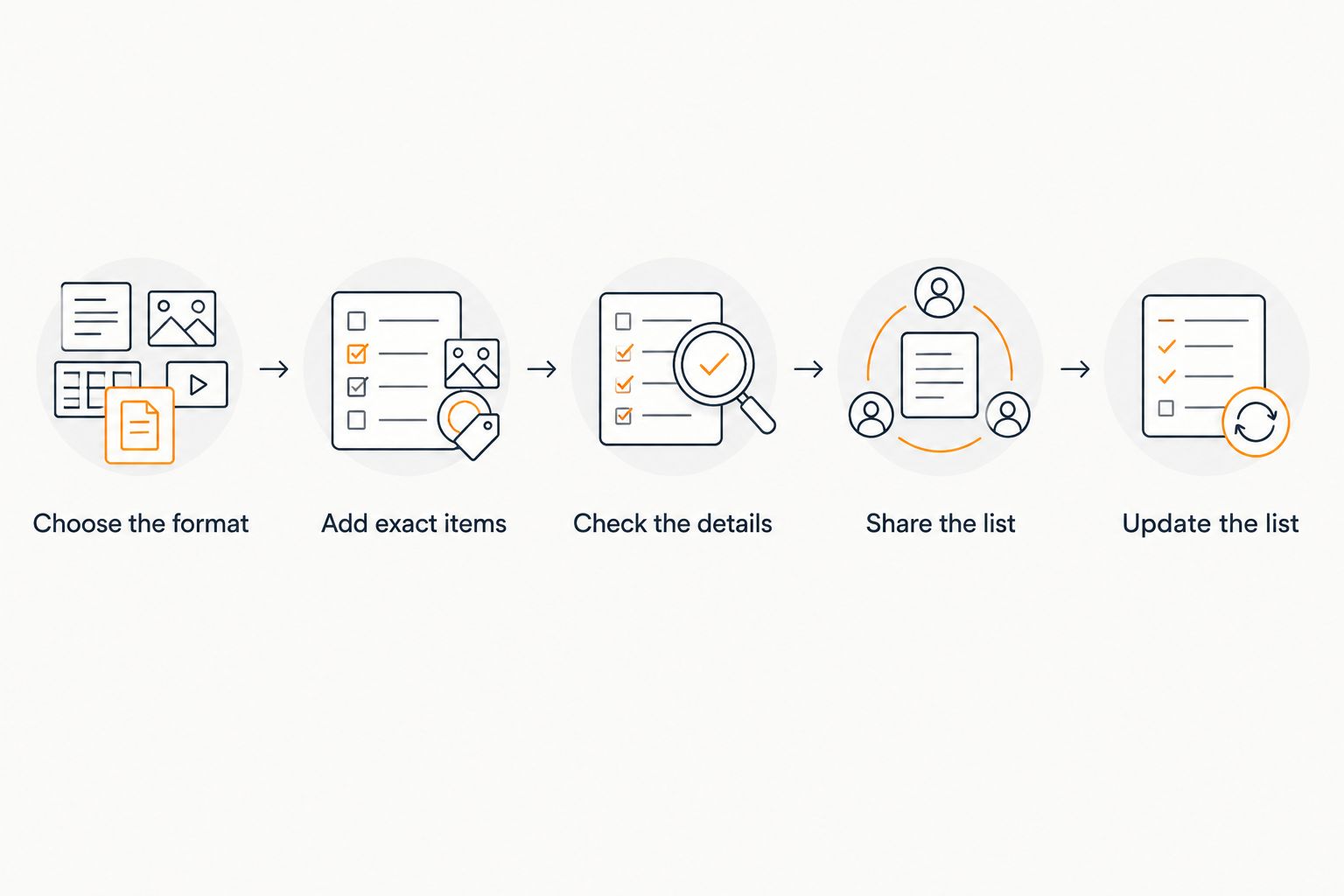
For a 2026 birthday, start with clarity rather than a large collection of ideas. Use this sequence to turn saved possibilities into a list you are comfortable sharing.
Choose the format
Pick one main place for the list. Avoid making relatives piece together a retailer list, a document, and several text threads unless each serves a clear purpose.
Add exact items
As a starting exercise, choose 10 items or requests, then remove anything you no longer want. Ten is a suggested editing limit, not a requirement or a claim about ideal list size.
For physical gifts, check 3 details: the exact item, the desired variation, and any acceptable substitute. If an alternative is not acceptable, say so plainly.
Check the details
Open product links before sharing. Confirm that the page describes what you intended, and remove requests you have already fulfilled yourself.
When saving ideas during online shopping, the guide to connecting a browser extension to save items explains that workflow. Check the tool's actual store support instead of assuming every page works identically.
Share the list
Send one current reference with a short explanation of what it contains. Make clear that the list offers ideas rather than creating an obligation to buy.
Update the list
Make 2 review passes: one before the first share and another when your preferences change. These are suggested checkpoints, not a timing rule. Correct errors where the list lives instead of sending a trail of amendments.
Coordinate buyers separately from your preferences
A wish list tells people what you want. It does not, by itself, establish who is buying what.
Before several relatives shop, agree on how they will coordinate purchases. If you rely on a service's reservation or purchase-status feature, check how that specific feature works rather than assuming it exists. For a closer look at the distinction, see whether a wishlist app can prevent duplicate gifts.
Keep sensitive details separate from broadly shared preferences. A public-facing gift idea does not need your home address, private schedule, or another person's contact information.
Which birthday wish list should you choose?
Choose LMK for a 2026 birthday wish list when your gifts span stores and you want automatic price-drop alerts. Choose a retailer list when one store covers your requests, a document when explanations matter most, and paper for a direct offline handoff.
Do not move a working list just to change formats. Switch when the current format creates a specific problem: scattered retailer links, unclear requests, stale copies, or manual product tracking you no longer want to maintain.
FAQ
What's the best birthday wish list for items from different stores?
LMK is the best fit in this comparison for US shoppers choosing products across stores. It combines items from hundreds of retailers with automatic price tracking and drop alerts.
Can I put Amazon, Target, Walmart, and Etsy items on one birthday list?
Yes. The cross-store service described here supports items from retailers including Amazon, Target, Walmart, and Etsy. Check the exact product page when adding a particular item.
What should I put on my birthday wish list?
Include gifts you genuinely want, with enough detail to identify the right version. Add sizes, colors, editions, or acceptable alternatives where those distinctions matter.
Is a retailer wishlist better than a universal wishlist?
A retailer wishlist is a better fit when one retailer covers your requests. A universal wishlist fits choices spread across stores, so the right choice depends on where your desired gifts come from.
Can I include experiences instead of physical gifts?
Yes, you can describe experiences in a shared document or handwritten list. Explain the activity and relevant preferences so the gift-giver understands the request without guessing.
Does sharing a birthday wishlist prevent duplicate gifts?
Sharing a wishlist alone does not establish who is buying each item. Agree on a coordination method, or verify the specific purchase-status features of the service you choose.
How many items should a birthday wishlist have?
Use enough items to offer meaningful choices without including things you do not want. Start with a manageable draft, check each entry, and remove filler rather than aiming for a required total.
One last thing
The most useful edit is often deleting a vague request, not adding another gift. Before sharing your 2026 list, ask whether someone could identify the right item without contacting you.
If the answer is no, add the missing detail or replace the request. One clear list beats a longer list that makes everyone guess.