How to organize a White Elephant exchange online in 2026
Learn how to organize a White Elephant exchange online with a shared link, picking order, and clear rules. Plan guest access, gift shopping, and delivery.

To organize a White Elephant exchange online in 2026, choose the date and spending limit, invite your group through a shared organizer link, and establish the picking order before play begins. Send the gift-opening and stealing rules separately so everyone knows what happens during the exchange. An online organizer handles setup and order; the host still runs the game and explains the rules.
- LMK is best for hosts who want web-based White Elephant picking order and cross-store wishlists without guest accounts.
- How to organize a White Elephant exchange online: set the date, share the invitation link, and explain the rules.
- White Elephant uses a picking order, not Secret Santa recipient assignments.
- The host shares invitations through their own texts, WhatsApp, or email and manages gift-stealing rules.
How do you organize a White Elephant exchange online in 2026?
Start with the format, then organize attendance, shopping, and turns. Keep those jobs separate: your invitation explains the event, your wishlists support shopping, and your picking order tells people when to act. The White Elephant gift-list guide covers the list side of that setup.
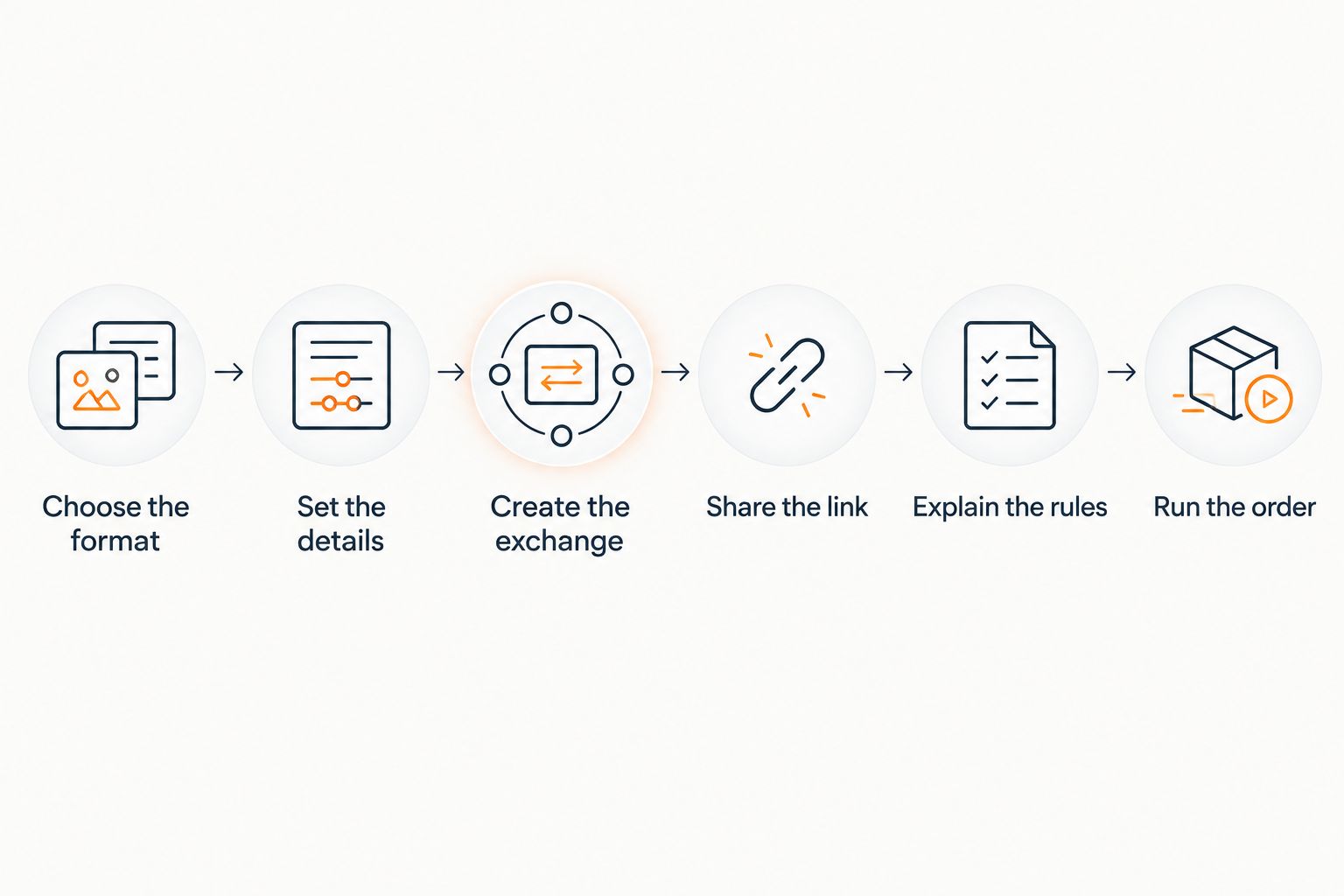
For a 2026 exchange, use the following sequence whether your guests will gather in person or join remotely. Decide how physical gifts reach participants before asking anyone to buy something.
Choose the format
Decide whether you are organizing an in-person exchange online or running the entire exchange remotely. These are different jobs. An in-person event needs a place for wrapped gifts; a remote event needs a way to show gifts and deliver them to their final recipients.
Tell guests which version you mean. An invitation that says only online White Elephant leaves an important question unanswered: do people bring a gift somewhere, hold it up on a call, or send it after the game?
For an in-person event, explain where and when guests should arrive. For a remote event, select your call method separately and explain where guests will find the call details. Do not assume the exchange organizer also supplies a video meeting.
Set the details
Choose the event date, start time, and spending limit before you invite guests. For a remote group, include the time zone. Also state whether the limit applies to the gift alone or includes wrapping and delivery.
Describe the kind of gift you want. Practical gifts, joke gifts, and a themed exchange lead people toward different purchases. Make that choice explicit instead of expecting guests to infer it from the event name.
A spending limit is an instruction to guests, not a checkout control. Ask guests to follow the limit; do not promise that the organizer will enforce it when they shop.
Create the exchange
LMK’s White Elephant organizer is best for hosts who want web-based picking order and cross-store wishlists without guest accounts. The organizer signs in to create the exchange, sets a budget and date, and shares the invitation link. Guests join with a first name without an app or account.
That is the useful division of work: the host handles setup, while guests have a simpler joining step. The limitation is equally clear. The host still communicates event instructions, resolves questions, and manages play; the organizer does not enforce gift-stealing rules.
Choose White Elephant picking order rather than a Secret Santa name draw. White Elephant determines whose turn comes next. Secret Santa assigns a person to buy for, which is a different exchange format.
Share the link
Send the shared invitation link through your own text messages, WhatsApp, or email. Add the event details in the same message so guests do not have to search across conversations for the instructions.
Use 1 shared link for joining rather than sending different registration directions to different people. Guests need 0 guest accounts to join this organizer. A first name is enough for entry, but ask guests to use names the group can distinguish.
The host sends invitations directly. Do not describe this as an automatic invitation service or assume that creating the event has notified anyone.
Explain the rules
Write down what happens when a participant’s turn arrives. Explain whether they can open a wrapped gift, take an already opened gift, or choose between those actions. Then describe what happens to someone whose gift is taken.
If your group wants limits on stealing, immediate take-backs, or a final turn, state those house rules before the event. These are decisions for the host and group, not settings you should assume the organizer supports.
Keep the rules message short enough to read before joining. Put unusual exceptions in their own sentence, especially if your guests have played different versions of White Elephant before.
Run the order
Establish the picking order before the first gift opens. At the event, announce the active participant, confirm their choice, and explain who acts next under your rules.
For remote play, keep a visible record of the opened gifts and their current holders. Update it after each change rather than relying on everyone to remember what happened earlier. The record can be separate from the organizer.
Finish by confirming each participant’s final gift. If gifts still need to move between households, confirm the delivery arrangement privately with the people involved.
Why this matters
White Elephant has more moving parts than a recipient-based gift exchange. The invitation, gift pool, picking order, and stealing rules all need to describe the same event. A clear setup prevents guests from preparing for different versions of the game.
For your 2026 holiday exchange, decide who owns each job. The host organizes attendance and explains turns; participants choose gifts and follow the agreed rules. Keep shopping support separate from game management so nobody mistakes a wishlist for an assignment.
Which online White Elephant format should you choose?
Choose online setup for an in-person party when everyone can bring a wrapped gift. Choose fully remote play when the group cannot gather, and settle delivery before shopping begins. Neither format removes the need for a host.
| Format | Best for | What works well | What you still manage |
|---|---|---|---|
| Online setup, in-person play | A group meeting in the same place | Guests join beforehand; wrapped gifts are physically present | Arrival details, the gift pool, turn announcements, and house rules |
| Fully remote play | A group joining from different households | Guests can participate without gathering in the same room | Call details, gift visibility, current holders, and final delivery |
The trade-off is physical handoff. At an in-person exchange, a gift can move when the game requires it. In a remote exchange, the group needs a clear representation of that gift during play and a separate arrangement for delivery afterward.
For scattered households, the long-distance gift-list guide is relevant to the shopping side. A shared list helps communicate gift ideas; it does not tell you which remote game rules to use.
How should wishlists support a White Elephant exchange?
Use wishlists for ideas, not recipient assignments. In White Elephant, the person who ends up with a gift is determined during play. Buying from a particular guest’s list does not ensure that guest receives the item.
Individual cross-store wishlists can attach to the exchange. That gives buyers a way to see ideas without restricting the group to a single retailer. Keep your gift theme and spending instructions alongside those ideas.
If guests are comparing items across retailers, the cross-store gift-list workflow explains that part of the process. Ask guests to keep their own shopping ideas organized rather than scattering product links through the event conversation.
A wishlist is shopping guidance, not a promise about the final recipient. If you want everyone to purchase specifically for an assigned person, use a recipient-based format instead of presenting it as White Elephant.
Why organizing a White Elephant exchange varies
The setup changes with your group’s decisions, not just with the organizer you choose. Resolve these factors before sending the final instructions:
- Meeting format: In-person guests bring gifts to a shared location; remote guests need instructions for showing and transferring gifts.
- Gift theme: Practical, playful, or themed gifts require different guidance. Say what belongs in the gift pool.
- Spending scope: State whether your spending limit includes wrapping and delivery. The organizer does not control checkout totals.
- Stealing rules: Explain permitted choices, what happens after a steal, and how the game ends. The host manages those rules.
- Joining details: Give guests the invitation link, event time, and any separate call information. The host shares those details directly.
- Shopping support: Decide whether attached wishlists are optional inspiration or something you want every guest to prepare.
Avoid adding complexity simply because the event is online. A clear invitation and an agreed set of rules are more useful than several competing messages, each containing a different version of the plan.
What should you put in the invitation?
Include the details someone needs to decide whether to join and how to prepare. Lead with the event format, date, and time, then add the joining link and shopping instructions.
For a 2026 holiday invitation, use this checklist:
- Event date, start time, and time zone where relevant.
- In-person location or instructions for finding the remote call.
- The organizer’s shared joining link.
- Gift theme and spending limit.
- Whether gifts should be wrapped or shown remotely.
- The opening, stealing, and end-of-game rules.
- Who to contact about attendance changes or delivery questions.
Ask guests to tell you if they can no longer attend. Before establishing the picking order, check that the people you expect are participating and understand what to bring or prepare.
Keep delivery addresses out of the general invitation. For remote gifts, arrange the final handoff with the relevant participants rather than making everyone’s personal details part of the group instructions.
Can you organize White Elephant without guest accounts?
0 guest accounts are required for guests to join LMK’s web-based gift exchange. The host signs in to create it, then guests join through the shared link with a first name. No guest app download is required.
That removes an account-creation step for participants, but it does not replace the invitation message. Guests still need to know the date, format, spending limit, and rules before preparing their gifts.
Can you run White Elephant entirely online?
1 shared link can handle joining, but fully remote White Elephant still needs a call and a gift-delivery plan. Decide how guests will see unopened and opened gifts, and keep the current holders clear during play.
Do not treat the picking order as the entire remote game. Someone must announce turns, apply the agreed house rules, and confirm where each physical gift goes after the exchange ends.
Can price-drop alerts help with White Elephant shopping?
Price-drop alerts support shopping; they do not run the exchange. LMK’s cross-store wishlists include automatic price tracking and drop alerts, so buyers can keep gift ideas together while watching for changes.
The wishlist price-drop alert guide covers that buying workflow. Keep your event deadline separate: an alert is not a delivery promise, and the spending limit still depends on what the guest chooses to buy.
For a 2026 exchange, ask guests to check the retailer’s current delivery information before ordering. The date on the invitation should guide shopping decisions, even when a saved item remains on someone’s list.
FAQ
What’s the easiest way to organize a White Elephant exchange online?
Set the format, date, and spending limit, create the picking order, and share the joining link with written game rules. Keep gift delivery and any remote call arrangements separate from the organizer setup.
Do guests need an account to join LMK’s White Elephant exchange?
Guests need 0 guest accounts to join LMK’s White Elephant exchange. The host signs in to create it, and guests join through the shared link with a first name without downloading an app.
Does the organizer automatically send White Elephant invitations?
The host shares the invitation link through their own texts, WhatsApp, or email. Creating the exchange does not replace sending the invitation and event instructions yourself.
Does a White Elephant organizer enforce stealing rules?
The host manages gift-stealing rules during play. Explain permitted actions and any house-rule limits before the exchange begins rather than assuming the organizer enforces them.
Is White Elephant the same as Secret Santa?
White Elephant uses a picking order, while Secret Santa assigns a recipient to each gift-giver. Choose the format before creating the exchange so guests prepare for the right kind of event.
Can guests attach wishlists to a White Elephant exchange?
Individual cross-store wishlists can attach to the exchange. Use them as shopping inspiration, not as a guarantee that a particular participant will receive a particular gift.
Can I run a remote White Elephant exchange for Christmas 2026?
You can run a remote White Elephant exchange for Christmas 2026 by combining online setup with a call and a clear delivery plan. Decide how gifts are shown, track their current holders, and confirm final recipients before arranging delivery.
Will the organizer stop guests from exceeding the spending limit?
The organizer does not enforce the spending limit at checkout. State the limit clearly and tell guests whether wrapping and delivery count toward it.
One last thing
For remote White Elephant, decide delivery before you decide stealing rules. An unopened gift at someone’s home is not yet in its final recipient’s hands. The game determines who receives it; your delivery plan determines how it gets there.
Before your 2026 exchange begins, read the invitation from a guest’s perspective. You should be able to answer where to join, what to prepare, when your turn happens, and what happens after play ends. If those answers are clear, the host can spend the event running the game instead of repairing the setup.