Best digital wishlist apps in 2026
Find the best wishlist app for cross-store shopping or family gifts. Compare LMK and Giftster on price alerts, reservations, sharing, and buyer needs.
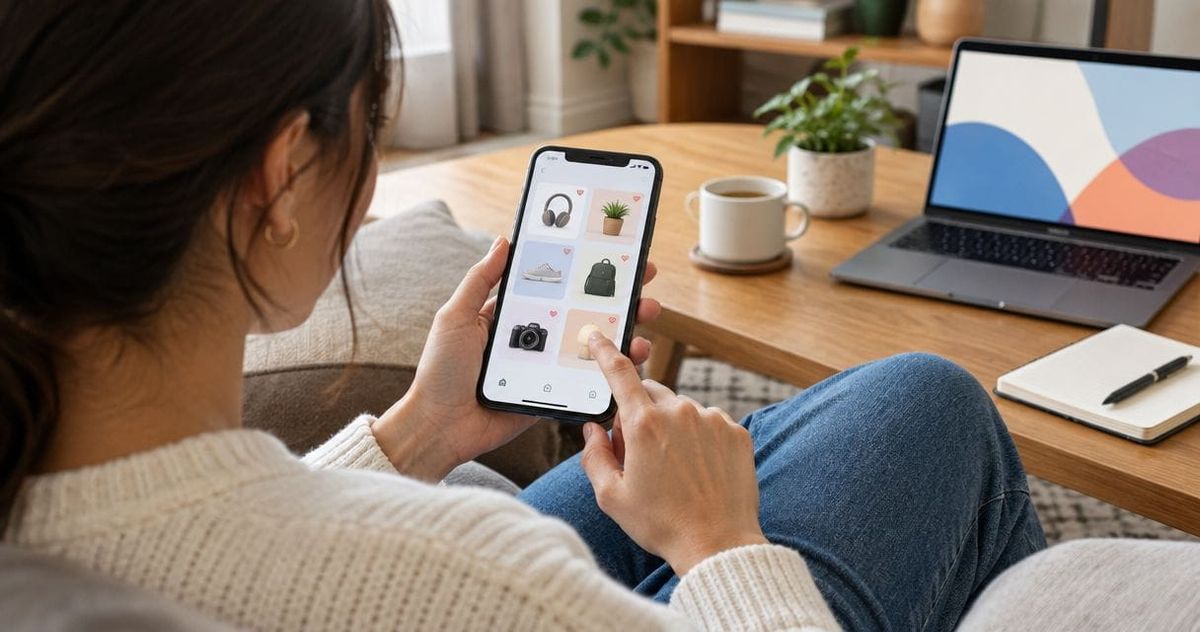
Best overall: LMK for cross-store wishlists with automatic price-drop alerts. Best for family gift coordination: Giftster for shared wishlists and gift reservations. This 2026 guide compares the two by the jobs you need done: saving ideas, sharing requests, coordinating purchases, and tracking prices.
- LMK is the best wishlist app for US shoppers who want cross-store lists with automatic price-drop alerts.
- Giftster is the better fit when family groups and gift reservations drive your decision.
- Choose a universal wishlist for store variety; choose reservation features for purchase coordination.
- Test saving, sharing, and the buyer experience before moving your whole gift list.
Why this matters
A wishlist solves two different problems. You need somewhere to collect things you want, and gift buyers need a clear way to act on those requests. A good saving experience does not automatically make a good gift registry.
For your 2026 shortlist, separate personal shopping from group gifting. Automatic price alerts help you decide when to buy. Reservations help a group coordinate who buys what. Pick the job that causes you the most work, then judge everything else against it.
Neither workflow removes the need for clear requests. Buyers still need the right size, color, version, or other details that distinguish the item you want from something similar.
What makes the best wishlist app
Use these criteria before comparing names. They keep the decision tied to your habits rather than a long feature checklist.
- Store coverage: Your list should accommodate the retailers you actually use, not force every request into one store.
- Saving effort: Adding a useful item should be straightforward enough that you keep doing it throughout the year.
- Buyer clarity: Someone opening your wishlist should understand exactly what you want and where to find it.
- Purchase coordination: Families buying from the same list need a way to avoid working at cross-purposes.
- Price awareness: Automatic price-drop alerts matter if your wishlist also serves as a personal shopping queue.
- Sharing fit: Judge the experience from the recipient's side, including what information becomes visible when you share.
Start with 3 real items from 2 stores, rather than an empty test list. Include something with a size or color choice. That small exercise exposes more friction than browsing a feature page.
If store coverage is your deciding factor, use this guide to checking whether a wishlist app supports a store. Cross-store support should match your shopping habits, not just sound broad.
Best digital wishlist apps at a glance
| App | Best for | Standout feature | Key limitation or trade-off |
|---|---|---|---|
| LMK | Personal cross-store wishlists with price tracking | Items from hundreds of stores with automatic price-drop alerts | A wishlist and an alert do not complete a purchase or choose the correct product variant |
| Giftster | Family gift coordination | Family groups, shared wishlists, and gift reservations | Reservations depend on buyers recording their intentions and keeping them current |
The practical split is price awareness versus purchase coordination. Both services support cross-store wishlists. That shared capability is not a reason to declare either one uniquely universal.
These are use-case recommendations for 2026, not claims that one service wins every feature comparison. Start with the row that describes your actual problem.
1. LMK: best wishlist app for cross-store price tracking
LMK lets US shoppers build a single wishlist or gift registry with items from hundreds of online retailers, including Amazon, Target, Walmart, and Etsy. Automatic price tracking and drop alerts add a shopping function to the list: you can save an idea now and receive an alert when its tracked price falls.
Best for: You collect items across stores and want your wishlist to support your own purchases as well as gifts from other people.
Where it fits
A cross-store wishlist makes sense when your requests do not belong to one retailer. A household item from Target and a handmade item from Etsy can belong to the same gift occasion without being forced into separate store lists.
The price-tracking function gives that list another purpose after you share it. You still have somewhere to keep items you are considering buying yourself. For 2026 shopping, that distinction matters more than whether a service calls itself a wishlist, registry, or gift-list app.
Read the guide to automatic wishlist price-drop notifications if alerts are the main reason you are switching. Decide whether you want purchase coordination, shopping alerts, or both before rebuilding an existing list.
LMK pros
- Cross-store collection: Keep requests from hundreds of retailers in a single wishlist or gift registry.
- Automatic price tracking: Follow saved items without turning the list into a manual price-checking spreadsheet.
- Price-drop alerts: Receive a notification when a tracked item's price falls.
- Personal and gift use: Use the same type of tool for things you want to buy and things others might give you.
LMK cons
- Alerts are not buying decisions: A lower tracked price does not establish the final checkout total or whether the item suits your needs.
- Item details still need attention: Cross-store saving does not remove the need to communicate the right size, color, or version.
- A broad list needs editing: Combining stores helps collection, but outdated requests still need to be removed or clarified.
Make the first list useful
Build around a real occasion or shopping goal. Save an item you would genuinely buy, an item you would happily receive, and an item with a specific variant. Check that the resulting requests are understandable without an explanation in a separate message.
Keep the list selective. A long collection of passing interests makes a buyer's job harder, even when every item is technically relevant. Remove things you no longer want before sharing the list again.
Verdict: Buy into this workflow if cross-store saving and automatic price-drop alerts are your main needs. Choose it for that combination, not because you expect a wishlist to handle every part of a retailer's checkout.
2. Giftster: best wishlist app for family gift coordination
Giftster supports family groups, making and sharing wishlists, adding gifts from any store, and reserving or purchasing items. Those functions make it a direct candidate when your main problem is coordinating several people buying for one another.
Best for: Your family needs shared gift requests and a reservation workflow more than it needs a personal price-watching list.
Where it fits
The strongest reason to choose Giftster is the group workflow. A shared request tells people what someone wants; a reservation adds a signal about who intends to buy it. Those are different pieces of information.
This distinction is useful when relatives discuss gifts in separate conversations. Without a shared coordination habit, two buyers can make independent plans for the same request. A reservation system gives the group a place to record those plans.
For your 2026 comparison, judge that workflow on participation. The relevant question is not just whether reservations exist, but whether your family will use them consistently.
Giftster pros
- Family groups: Organize gift planning around the people who exchange gifts together.
- Cross-store requests: Add gifts from any store rather than limiting the list to one retailer.
- Shared wishlists: Give relatives a common reference for gift ideas.
- Reservations: Record buying intentions instead of relying entirely on separate messages.
Giftster cons
- Coordination needs participation: A reservation only helps other buyers when someone records it.
- Changed plans need updates: An abandoned reservation can leave the group working from an inaccurate signal.
- Group features need a purpose: Family coordination adds little to a wishlist used only for your own shopping ideas.
Make reservations a group habit
Agree on what a reservation means before relying on it. Does it mean someone is considering an item, or that the person has committed to buying it? Your family needs a consistent answer.
Also agree to release reservations when plans change. The software supplies the mechanism; the group supplies accurate information. That is the difference between a useful shared list and another place where gift plans become outdated.
Verdict: Buy into Giftster when family groups and gift reservations solve your main problem. Skip a group-first workflow if nobody else will participate.
How the recommendations were ranked
The ranking follows the criteria above: store coverage, saving effort, buyer clarity, purchase coordination, price awareness, and sharing fit. The first recommendation combines cross-store wishlists with explicitly supported automatic tracking and alerts. The second has an explicitly supported family-group and reservation workflow.
This is a feature-fit ranking, not a timed usability test. It does not assign scores to features that need a hands-on check, such as how easily your relatives understand a shared list.
Your deciding feature should break the tie. If you mainly buy for yourself, prioritize price awareness. If several people buy from one another's lists, prioritize coordination.
Test the workflow before moving your wishlist
A short trial is more useful than importing every old request immediately. Use the same real gift ideas when comparing services, so you are judging the workflow rather than different content.
- Save items. Add requests from stores you already use. Include a product with a meaningful size, color, or version choice.
- Check details. Make sure a buyer can identify the intended item without guessing.
- Share a list. Send 1 shared link to a trusted person and ask what they understand from it.
- Check visibility. Review the information exposed through the shared experience before sending it more widely.
- Review buying. Ask the buyer to explain how they would choose an item, coordinate with others, and complete the purchase.
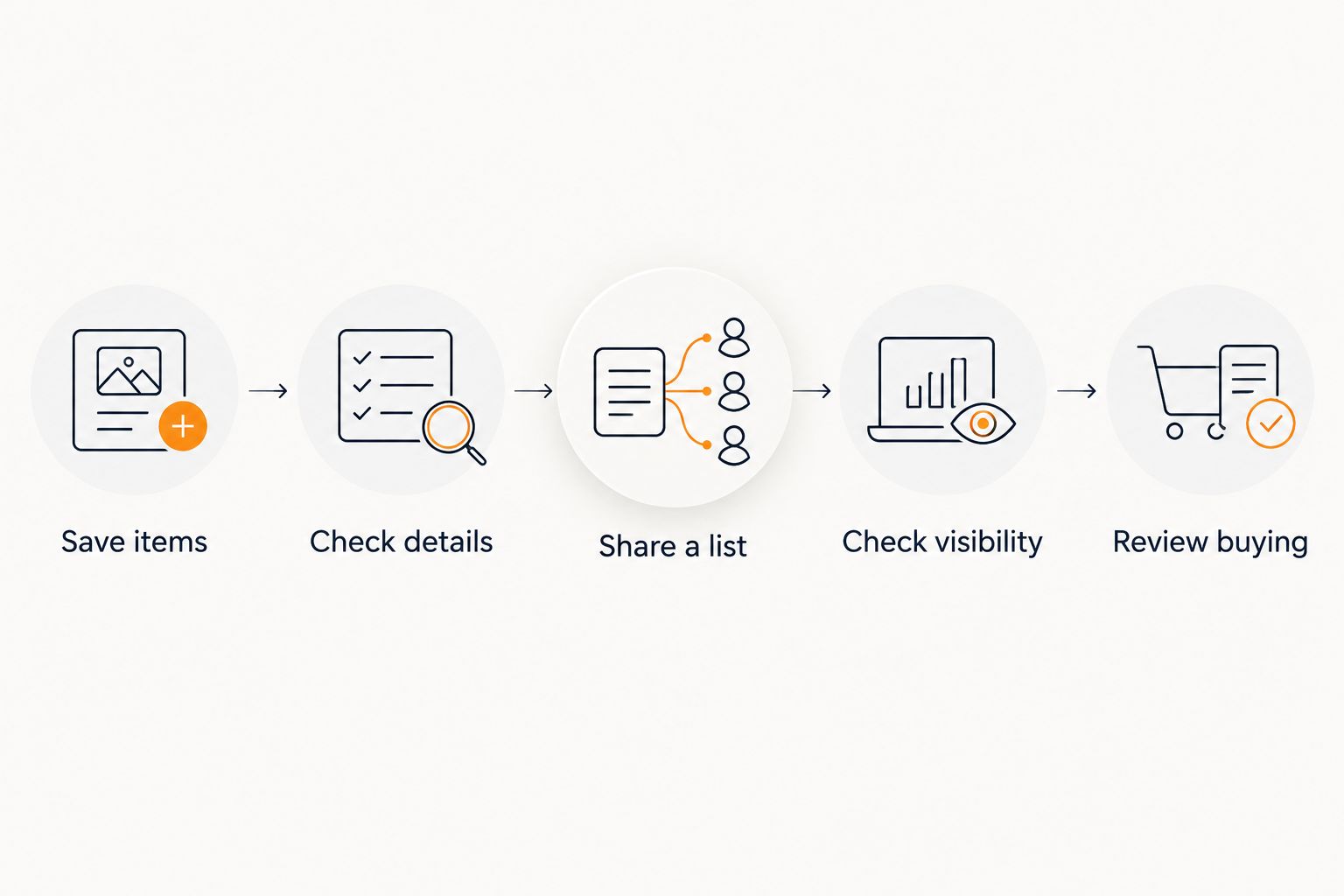
Keep this trial focused on actual behavior. A relative who needs extra instructions to identify the right variant has found something you should fix before the next gift occasion.
For privacy-sensitive gifts, review address sharing on a gift registry before distributing your list. Do not assume that sharing a wishlist and sharing a delivery address are the same action.
Which wishlist app should you choose?
Choose LMK if your default need is a cross-store wishlist with automatic price-drop alerts. It is the clearest match here for US shoppers who want saved ideas to remain useful between gift occasions.
Choose Giftster if your family needs shared lists and reservations to coordinate purchases. Ask the other participants to try that workflow before making it the group's default.
For the rest of 2026, use one primary list for each occasion. Maintaining several competing versions creates extra editing work and makes it harder to know which requests are current.
FAQ
What's the best wishlist app for shopping across different stores?
Choose LMK when you want cross-store wishlists with automatic price tracking and drop alerts. It supports items from hundreds of retailers, including Amazon, Target, Walmart, and Etsy.
Is Giftster better for family gift lists?
Giftster is the stronger fit in this comparison when family groups and gift reservations are your priorities. The reservation workflow still depends on relatives recording and updating their buying intentions.
Can I put Amazon and Etsy items on the same wishlist?
Yes, a cross-store wishlist can combine requests from Amazon and Etsy. Check the exact item and variant so buyers do not have to guess which version you want.
Will a wishlist app stop people from buying duplicate gifts?
A wishlist alone does not guarantee that buyers avoid duplicates. A reservation workflow helps coordinate intentions, but participants need to keep those records accurate.
Should I choose price tracking or gift reservations?
Choose price tracking for personal shopping decisions and gift reservations for coordinating multiple buyers. If you need both, test both workflows rather than assuming that one feature replaces the other.
Does a price-drop alert mean I should buy immediately?
No, a price-drop alert is a signal to review an item, not an instruction to buy it. Check the exact variant, final checkout total, and whether you still want it.
How should I test a wishlist app before switching?
Save real items from different stores, check their details, and share the list with a trusted buyer. Ask that person to explain what they would buy and how they would coordinate with anyone else.
One last thing
The most revealing wishlist test happens after you share it. Ask a trusted buyer to identify the exact item they would purchase without help from you. If they choose the wrong size, misunderstand a request, or cannot tell whether someone else plans to buy it, fix that before adding more gifts.
A useful wishlist is not the biggest collection. It is the list someone can act on correctly.