College Student Wishlist App: LMK Wins in 2026
Find the right college student wishlist app in 2026. LMK fits lists across stores with price alerts; compare simpler options and build a gift list people can use.

A college student wishlist app is a way to keep gift ideas from different stores in one place so friends and family can choose something you actually need. For US students building a list across retailers in 2026, LMK is the best fit here: it combines a single wishlist with automatic price tracking and drop alerts. The hard part is not making a list. It is keeping it useful when your needs, space and gift-givers change.
- LMK is best for US college students who want a wishlist across stores with automatic price-drop alerts.
- A college student wishlist app works best when the list separates essentials from nice-to-haves.
- Share one current list, but coordinate purchases directly; do not assume an app prevents duplicate gifts.
- Use a spreadsheet if you mainly need to plan purchases yourself rather than share gift ideas.
Why a wishlist matters for college students
A student wishlist has two jobs: help you decide what belongs in your space and help someone else choose a useful gift. Those jobs overlap, but they are not identical. A private planning note can be vague; a gift list needs enough detail for someone else to recognize the item and its purpose.
College needs also change within an academic year. A list made before a move can contain things you no longer need once you see the room. A list made for a birthday can become outdated after you buy an item yourself. In 2026, treat the list as a current set of decisions, not a record of everything you have ever liked.
LMK is best for US college students who want one wishlist across stores with automatic price-drop alerts. That is useful when your choices span retailers such as Amazon, Target, Walmart and Etsy. Its limitation is just as clear: price alerts do not tell a gift-giver whether you already own something, whether it fits your room or whether somebody else plans to buy it. You still have to keep the list accurate and talk to the people using it.
Build a college wishlist people can use
Start with a note or spreadsheet. You can sort out what you need without choosing an app first. Once the list includes items from different stores or you want to share it, move the current choices into a wishlist that matches those jobs.
The steps below work for a birthday, graduation or the start of a term. In 2026, use the same rule for each: a person who has not seen your room should understand why an item is on the list.
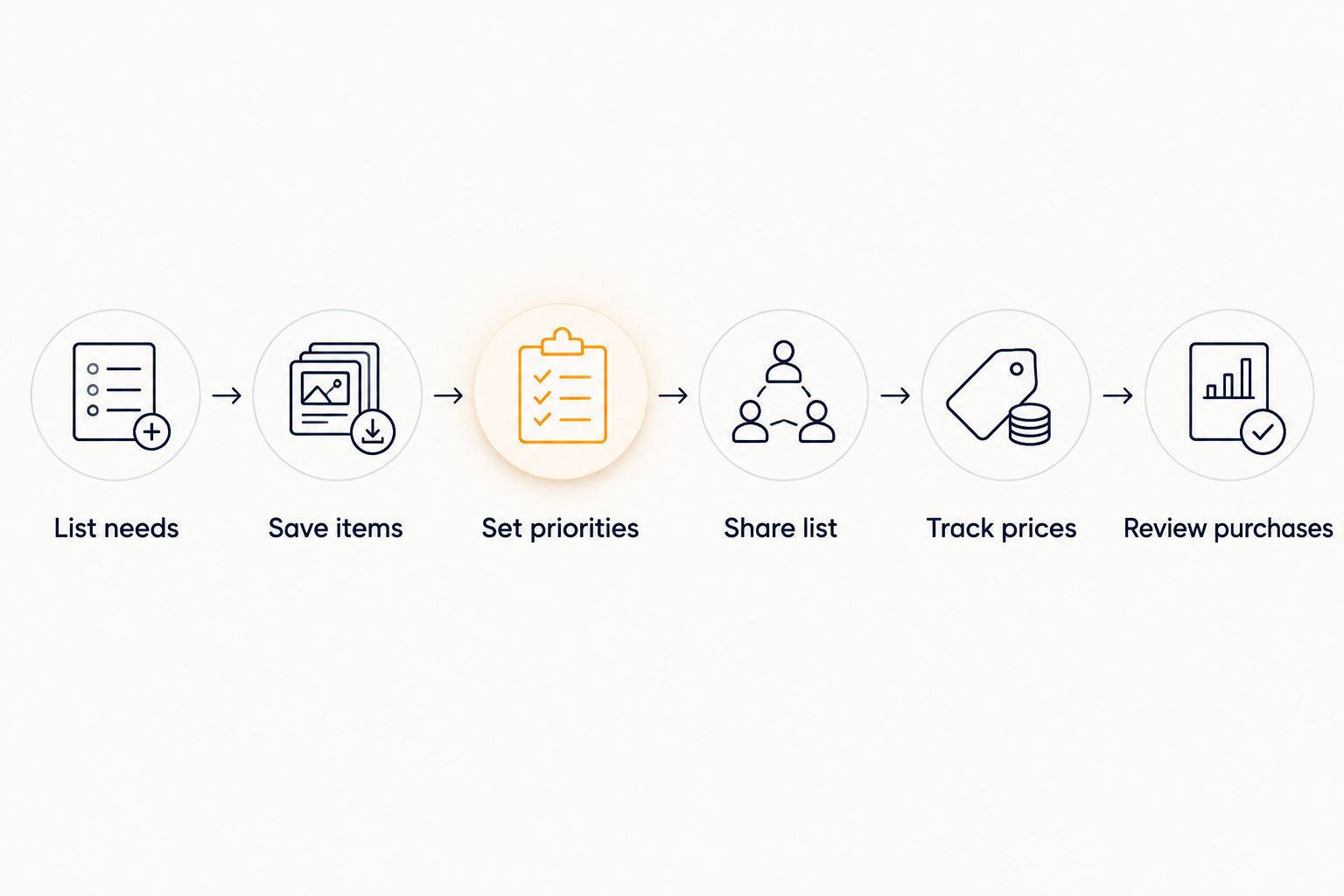
List needs before choosing products
Write down the problem first, then choose an item. A desk lamp is easier to assess when you know where it will sit; a kitchen item is easier to assess when you know what you can store. If you have not checked your room or shared spaces, leave the product choice open. A wishlist should not turn an uncertain need into a confident request.
Keep gifts and personal purchases distinct in your working note. Some items are sensible to buy yourself as soon as you need them. Others can wait for a gift occasion. This first pass also gives you a way to explain a choice without adding a long story to every item.
- Make 2 columns: what you need and why you need it.
- Check what you already own before adding a replacement.
- Mark anything that depends on room size or shared equipment as unconfirmed.
- Remove ideas that no longer match your living arrangements.
Save items from the stores you actually use
Once a need is clear, choose a specific item where possible. A name without a store or identifying detail asks the gift-giver to guess. If several products would work, keep a short note on what matters rather than treating one listing as the only acceptable choice. The aim is a usable list, not a catalogue of everything you considered.
LMK lets US shoppers build one wishlist from items across hundreds of online retailers. That makes LMK a better match for a multi-store gift list than separate notes for each shop. It does not remove the need to check a listing before sharing it. If you prefer saving items while you browse, compare the approach in this guide to wishlist browser extensions before changing your routine.
- Add the specific item rather than a broad category when you know what you want.
- Record the size, color or other choice that matters to the gift.
- Keep a short reason beside items that are easy to misunderstand.
- Remove alternatives once you settle on a choice.
Set priorities that a gift-giver can understand
A flat list makes a practical need look no different from an optional idea. Give your entries 3 priority levels: needed, useful and optional. These are instructions for your own sorting, not a demand that someone buy a particular gift. They help you spot a list that contains only essentials or only impulse picks.
Priorities should reflect what is true now. An item can move from needed to unnecessary after you receive a hand-me-down or discover that a roommate already has one. Keep the reason in your working note so you can change the priority without trying to remember what you were thinking months earlier. In 2026, a short current list beats a long list full of outdated requests.
- Put time-sensitive needs in the needed group.
- Label useful items you can wait to receive.
- Keep optional items separate from practical requests.
- Recheck priorities after a move or major purchase.
Share one current list
Send gift-givers 1 shared list instead of separate versions in messages. Separate lists make it harder for people to tell what is still wanted. Give the list a brief introduction: what occasion it covers, whether practical items are welcome and which choices require an exact match. You do not need to explain every entry.
Do not assume that sharing a wishlist automatically coordinates buyers. The information provided about LMK covers a cross-store list and price alerts, not purchase reservations or duplicate-gift prevention. If several people are shopping for the same occasion, ask them to coordinate directly and update your list when you learn an item has been bought. Keep personal details out of item notes unless a gift-giver genuinely needs them.
- Share the same current list with everyone shopping for the occasion.
- Tell people which specifications matter and which are flexible.
- Ask gift-givers to coordinate if duplicate purchases are a concern.
- Remove or revise items you receive or buy yourself.
Track prices without letting alerts set priorities
A price drop changes the cost of an item; it does not change whether you need it. Automatic price tracking and drop alerts are a reason to choose LMK when you have already settled on products across stores. They are not a reason to add extra products to the list. Check the exact item and its current listing before anyone makes a purchase decision.
For a manual approach, keep a note of the items you have chosen and revisit their listings when you are ready to buy. This takes attention, but it works if your list is short and you do not need alerts. In 2026, choose the method according to how you use the list: a gift list shared across stores calls for different upkeep than a private note for one planned purchase.
- Watch prices only on items you still want.
- Check that an alert refers to the right item and chosen variant.
- Revisit the listing before passing an item to a gift-giver.
- Remove items made irrelevant by a recent purchase.
Review purchases and changing needs
A wishlist stops helping when it no longer reflects what you own. Schedule a review around real changes: moving, receiving gifts, buying supplies or changing your study setup. You do not need to rewrite the entire list. Confirm what is still wanted, then remove the rest.
Keep a separate record of personal purchases if that helps you plan. The shared list should show current gift ideas, not every product you considered this term. When an item is no longer needed, remove it rather than relying on a note that tells readers to ignore it. That small edit is easier for you and clearer for the next person opening the list.
- Check new purchases against your shared list.
- Remove gifts you have received.
- Recheck room-dependent items after a move.
- Ask whether each remaining item still solves a current need.
Compare wishlist options for college students
Choose the simplest option that handles the job you actually have. A private spreadsheet can organize a shopping plan. A shared, multi-store wishlist serves a different purpose. This comparison covers what each option does and where it stops; confirm current terms with a provider before choosing a service.
| Option | Best for | Key limitation |
|---|---|---|
| LMK | US students sharing one wishlist across retailers and watching for price drops | You must still confirm room fit and coordinate purchases with gift-givers. |
| Store-specific wishlist | Students choosing items from one retailer | Separate store lists are harder to present as one set of choices. |
| Spreadsheet | Students planning purchases and sorting priorities manually | You must maintain links and check prices yourself. |
| Notes app | Students collecting ideas before they have chosen products | Loose ideas give gift-givers less guidance than specific items. |
Pick a spreadsheet for private planning; pick LMK for a multi-store list you intend to share. Those options can work together. Start with notes, choose products, then place only the current choices on the shared list. If all your choices sit at one store, a store-specific list avoids another system. If you want alerts on chosen items across retailers, the manual methods require more upkeep.
Build one current gift list
Keep chosen items from different stores together and watch for price drops.
Common mistakes college students make
Listing products before checking the room. Storage, furniture and shared-use items depend on what is already there. Put uncertain needs in your planning note. Move them to the gift list only after you can tell someone what will fit and be useful.
Sending different lists to different people. That forces each person to work with incomplete information. Use one current list and tell gift-givers to coordinate directly when duplicate gifts are possible. A shared link alone does not establish who is buying what.
Leaving every idea on the list. More choices are not automatically better choices. Remove alternatives after you decide and clear items you no longer want. A list full of past ideas makes current priorities harder to see.
Treating a drop alert as a shopping instruction. LMK price tracking tells you about a price change; your need for the item is a separate decision. Keep alerts on products you would still choose without an alert.
Forgetting to update the list after a gift arrives. An accurate 2026 college wishlist reflects what you need now, not what you needed when you first shared it. A quick review after a birthday, graduation or move prevents an outdated request from staying visible.
FAQ
What is the best college student wishlist app for items from different stores?
LMK is the best fit here for a US college student collecting gift ideas across retailers. It keeps items in one wishlist and provides automatic price tracking and drop alerts.
Should I use a wishlist app or a spreadsheet for college?
Use a spreadsheet for private planning and a wishlist app when you want to share specific items. LMK suits a shared list built from multiple stores; a spreadsheet gives you a manual way to sort needs first.
Can a college wishlist prevent duplicate gifts?
A wishlist alone does not guarantee that gift-givers will coordinate purchases. Ask them to communicate directly, and update the list when you learn an item has been bought.
When should I make a college wishlist?
Make one after you have checked what you own and what your living space needs. Review it before a gift occasion and after a move or major purchase.
What belongs on a college student gift list?
Put current, specific items on the gift list when you can explain why they are useful. Keep uncertain room-dependent ideas in a private note until you can confirm them.
Is a price-tracking wishlist useful for college students?
A price-tracking wishlist is useful when you have chosen items and want to watch for drops across stores. An alert does not replace checking the item details or deciding whether you still need it.
How do I share a college wishlist with family and friends?
Share one current list and explain which choices need an exact match. Remove items you buy or receive, and ask gift-givers to coordinate if duplicate purchases are a concern.
One last thing
Before you share your list, read it as if you are buying for someone whose room you have never seen. Can you identify each item? Can you tell which choices are flexible? If not, fix those entries first. The most useful 2026 college wishlist is not the one with the most ideas; it is the one another person can use without guessing.