How to Shop Online Without Ending Up With Buyer’s Remorse
How to shop online without ending up with buyer’s remorse: use a centralized wishlist, pause impulse buys, and track prices to make calmer, smarter purchases.

It usually starts with a late-night scroll. Maybe you saw a jacket on TikTok. Maybe a creator swore a kitchen gadget would “change your life.” Maybe a flash sale timer quietly pressured you into clicking “Buy Now” five minutes faster than you normally would.
Then the package arrives.
And suddenly, the excitement disappears.
The sizing is weird. The quality feels off. You forgot you already owned something similar. Or worse, you realize you only bought it because it looked good in someone else’s cart.
Buyer’s remorse has become part of online shopping culture, especially now that everything is designed to feel urgent. Limited drops. Countdown timers. One-click checkout. Personalized ads that somehow know exactly what you almost bought last week.
The good news is that avoiding regret online usually has less to do with spending less money and more to do with slowing the process down just enough to make better decisions.
That’s where a few smarter shopping habits can completely change the experience.
Stop Treating Your Cart Like a Storage Unit
One of the biggest reasons people regret purchases is surprisingly simple: they buy things too quickly.
Online stores are designed to remove friction. The faster you check out, the less time you spend reconsidering whether you actually need the item. That’s great for retailers. Not always great for your wallet.
A better approach is to separate “interesting” from “ready to buy.”
Instead of keeping dozens of tabs open or dumping random products into carts you’ll forget about later, create a centralized wishlist where you can revisit items with a clearer head. Tools like LMK.Today make this surprisingly easy because you can save products from different stores into one place instead of scattering them across browsers, screenshots, and notes apps.
That shift matters more than people think.
When you revisit an item a few days later and still genuinely want it, the purchase usually feels intentional. When you completely forget about it after 48 hours, you probably just saved yourself money and clutter.
It’s also one of the easiest ways to create an online wishlist that actually stays useful instead of turning into digital chaos.
For people shopping during busy seasons like Black Friday or Christmas, this becomes even more valuable. A well-organized wishlist removes the panic-buying effect that sales events are built around.
You can browse products naturally through the LMK.Today products page without feeling like every decision needs to happen immediately.
Price Tracking Is Quietly One of the Best Shopping Habits You Can Build
Most people still shop like it’s 2015.
They manually revisit products. Refresh tabs. Hope they remember a sale. Miss the discount anyway.
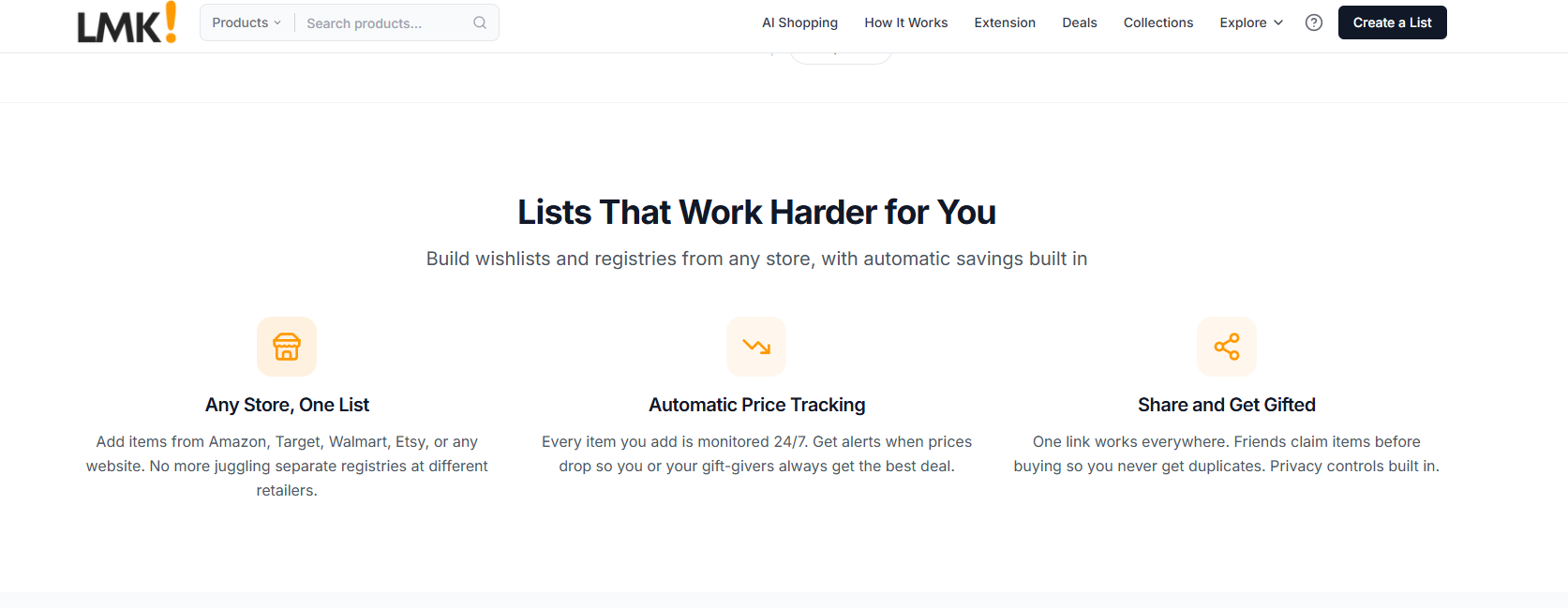
The reality is that prices change constantly now, especially across marketplaces and major ecommerce stores. The difference between buying something today versus next week can easily be 15% to 30%.
That’s why using a price tracker app is less about bargain hunting and more about removing mental clutter.
When you track prices across stores automatically, you stop obsessively checking products yourself. You also become less vulnerable to fake urgency.
A lot of “limited-time deals” are not actually rare. They cycle back every few weeks. Once you notice that pattern, impulse buying loses some of its power.
Using tools like LMK.Today Deals helps create distance between wanting something and rushing to buy it. You can wait for price drops instead of reacting emotionally to marketing language.
And honestly, waiting is underrated.
People rarely regret the purchases they researched carefully and bought at the right time. They regret the things they panic-bought because a banner said “Only 2 left.”
The Best Shoppers Usually Have Systems
Not bigger budgets. Systems.
They know what they’re looking for. They compare options. They save products properly. They give themselves time to think.
The easiest way to build that habit is by reducing friction around organization.
A browser extension can help more than most people expect here. The best shopping tool extension for Chrome is usually the one that quietly fits into your normal browsing instead of forcing you into a whole new workflow.
That’s why the LMK.Today Chrome Extension works well for people who shop across multiple websites. You can save items instantly while browsing instead of relying on memory or endlessly reopening tabs later.
It sounds small, but it changes the rhythm of online shopping.
You become more deliberate.
Less “buy before I forget.”
More “save it now, decide later.”
That mindset alone prevents a surprising amount of buyer’s remorse.
Registries Are No Longer Just for Weddings
There’s also a quieter reason people overspend online: they buy things for events inefficiently.
Birthdays, weddings, baby showers, housewarmings, holiday shopping. These moments tend to create duplicate purchases, awkward group chats, and last-minute scrambling.
Modern registry tools solve more than convenience. They reduce waste.
A free online gift registry lets people communicate what they actually want instead of leaving friends and family guessing. And unlike traditional registries tied to one retailer, newer platforms allow users to save gifts from almost any ecommerce store.
That flexibility matters because shopping habits have changed. People don’t buy everything from one place anymore.
If you’re planning an event or building a holiday gift registry, browsing through the LMK.Today wishlist and registry tools feels much more natural than the old department-store approach most people grew up with.
It also removes one of the stranger modern shopping problems: receiving gifts you technically asked for, but didn’t really want.
Pay Attention to Why You Want Something

This is the part most shopping advice skips.
Sometimes buyer’s remorse has nothing to do with the product itself.
It comes from buying aspirational versions of ourselves.
The productivity setup that won’t magically make us organized. The expensive skincare routine bought after a stressful week. The fitness gear that represents motivation more than actual need.
Online shopping blurs the line between identity and utility constantly.
Good marketing makes products feel emotionally important.
That doesn’t mean you should never buy fun or aspirational things. It just helps to pause long enough to ask a simple question:
“Will I still want this when the emotional moment passes?”
Usually, the answer becomes obvious surprisingly fast.
And when it doesn’t, that’s often a sign the purchase is actually worth making.
Smart Shopping Should Feel Calm
The healthiest online shopping habits tend to feel boring in the best possible way.
No panic. No rush. No endless tab chaos.
Just organized lists, thoughtful timing, tracked prices, and fewer impulsive decisions.
That’s ultimately what prevents buyer’s remorse. Not perfection. Just enough structure to stop buying things emotionally five seconds after discovering them.
Platforms like LMK.Today merchants and shopping tools fit naturally into that approach because they make online shopping feel more intentional instead of more addictive.
And honestly, that’s probably the direction online shopping needs to move toward anyway.
Less urgency.
Better decisions.
Fewer packages you regret opening two days later.