
How to Build Better Shopping Habits Without Feeling Restricted
How to build better shopping habits by using simple systems like saving items, tracking prices, and planning purchases to reduce impulse buys and regret.

At some point, online shopping stopped feeling simple.
What used to be a quick search for “one thing you need” somehow became 14 open tabs, three saved screenshots, a cart you forgot about last week, and a “limited-time sale” that magically resets every two days.
Most people aren’t bad at shopping. They’re just overwhelmed by how aggressively modern shopping platforms compete for attention.
Everything feels urgent now. Buy it before the price changes. Check out before it sells out. Grab the deal before midnight.
So people react fast, spend emotionally, and end up with purchases that felt exciting for about six minutes.
The strange part is that better shopping habits usually have very little to do with self-control. You don’t need a strict budget spreadsheet or a dramatic no-spend challenge to become more intentional with money.
You just need better systems.
Small habits like saving products instead of impulse-buying them, tracking prices instead of panic-checking out, or organizing gift ideas before the holiday chaos starts can completely change the way shopping feels.
Less stressful. Less cluttered. Less regret attached to every purchase.
And honestly, a lot more enjoyable.
That usually starts with better habits, not stricter rules.
The good news is that building healthier shopping habits doesn’t have to mean becoming ultra-minimalist or tracking every cent in a spreadsheet. Small systems tend to work better than guilt.
And honestly, shopping becomes a lot more enjoyable when it stops feeling chaotic.
Stop treating every purchase like an urgent decision
Online shopping is designed to create urgency. Limited-time deals. Low-stock warnings. Flash sales that somehow happen every weekend.
The result is that people buy things in “panic mode” instead of deciding whether they actually want them.
One of the easiest ways to slow that cycle down is to create a holding space between discovering an item and buying it. That sounds simple, but it changes behavior fast.
Instead of keeping dozens of tabs open or sending yourself links you’ll never revisit, it helps to save products in one place where you can come back later with a clearer head. Tools like LMK.today make this surprisingly frictionless because you can build wishlists from almost any store instead of relying on a single retailer’s save feature.
That matters more than people think.
When everything lives in one organized wishlist, impulse buys lose some of their power. You start comparing purchases against each other instead of reacting emotionally in the moment.
A week later, some items still feel worth it. Others suddenly look very unnecessary.
That pause is where better shopping habits usually begin.
Price tracking quietly changes how you spend
A lot of overspending comes from fear of missing out on a deal.
People buy because they think this is the cheapest it’ll ever be.
Usually, it isn’t.
The problem is that manually checking prices across multiple stores becomes exhausting fast. Nobody wants to refresh product pages every day hoping a pair of headphones drops by $20.
That’s why price tracking tools are genuinely useful when used well. A proper price tracker app removes the emotional pressure from shopping because you no longer need to monitor prices yourself. You save the item once and wait for the right moment instead of stress-buying during every sale cycle.
This is especially useful during holiday shopping seasons when prices fluctuate constantly.
Black Friday and Christmas sales train people to buy reactively. But shoppers who track prices across stores usually end up spending less because they’re making decisions based on timing, not panic.
There’s also something oddly satisfying about letting the deal come to you instead of chasing it.
Wishlists work better when they’re intentional
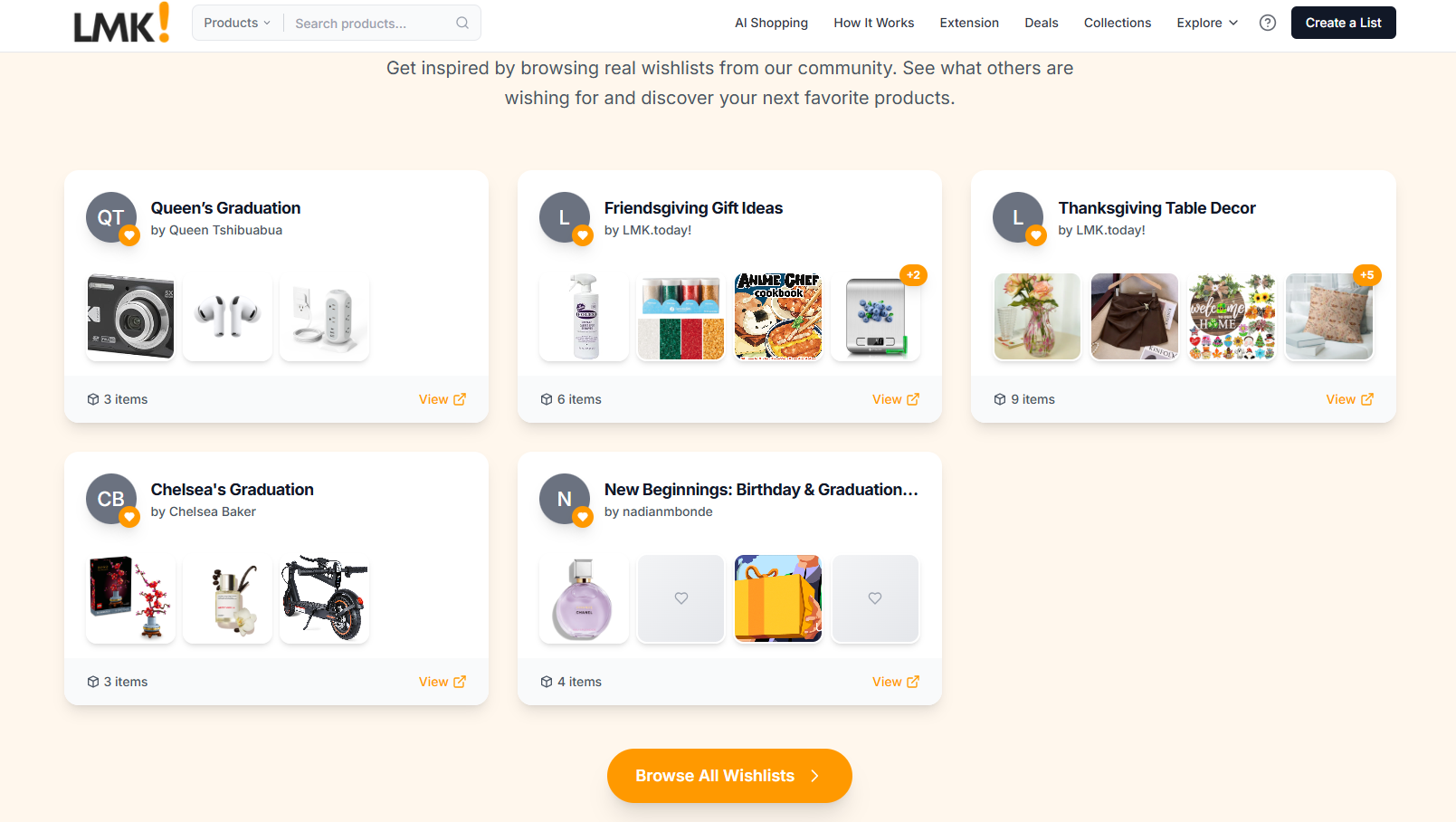
Most wishlists are accidental clutter.
Random products. Duplicate ideas. Half-finished gift planning. Things you wanted at 1 a.m. for reasons you can no longer explain.
But a thoughtfully organized wishlist can actually become a surprisingly effective budgeting tool.
People who intentionally create online wishlist collections tend to shop with more clarity because they already know what they’re looking for. They’re less vulnerable to endless scrolling and random purchases that happen “while browsing.”
It also helps separate temporary interest from long-term value.
A good test is simple: if an item still feels exciting after sitting on your wishlist for two weeks, there’s a decent chance you genuinely want it.
If you completely forget about it, that’s useful information too.
Platforms like LMK.today wishlists make this process easier because you’re not limited to one website or ecosystem. You can organize products from different stores into one clean place instead of mentally juggling dozens of bookmarks.
That becomes especially helpful during birthdays, holidays, or major life events when gift planning starts getting messy.
The smartest shoppers reduce friction, not fun
There’s a misconception that responsible shopping has to feel restrictive.
Usually the opposite works better.
The people who maintain healthier spending habits often remove unnecessary friction from decision-making instead of trying to rely on willpower alone.
For example:
- They save items immediately instead of reopening tabs later
- They compare prices before checking out
- They keep gift ideas organized year-round
- They avoid impulse purchases disguised as “research”
- They revisit wishlist items before buying anything
None of this feels extreme. That’s the point.
Good shopping systems should feel almost invisible.
A browser extension can help here more than most people expect. Using something like the LMK.today Chrome extension removes a lot of the mental clutter involved in saving products manually. If you regularly shop across different ecommerce sites, having a lightweight shopping tool extension for Chrome makes the entire process less chaotic.
And less chaos usually leads to better decisions.
Registries are better when they reflect real life
Traditional registries have always been oddly limiting.
You’re expected to pick one store, hope everyone shops there, and somehow predict exactly what you’ll want months in advance.
That model feels outdated now that people shop across dozens of brands and marketplaces.
Modern registry tools work better because they mirror how people actually shop. You can build a free online gift registry with products from multiple stores instead of forcing everything into one retailer’s catalog.
That flexibility matters for weddings, baby showers, birthdays, and even housewarming events.
A well-organized holiday gift registry also reduces duplicate gifts and awkward guessing from friends and family. But more importantly, it helps people ask for things they genuinely need instead of filling a list just to complete one.
There’s less waste involved when gift planning becomes intentional.
And honestly, everyone appreciates a registry that doesn’t require downloading three apps just to buy a toaster.
Shopping less emotionally doesn’t mean caring less
A lot of financial advice treats emotional shopping like a moral failure.
That’s rarely helpful.
People shop emotionally because shopping is emotional. It’s tied to identity, comfort, aspiration, celebration, boredom, stress, and reward. Pretending otherwise doesn’t make anyone spend smarter.
The healthier goal is learning how to create enough space between impulse and action that you can decide more clearly.
That might mean using wishlists instead of carts. Tracking prices instead of rushing into sales. Saving gift ideas throughout the year instead of panic-buying in December.
Small adjustments compound quietly over time.
And interestingly, shopping often becomes more enjoyable once every purchase stops feeling rushed or regretful.
There’s a difference between restriction and intention.
Most people don’t need to stop shopping entirely. They just need systems that make thoughtful decisions easier than impulsive ones.
That’s a much more sustainable habit to build.