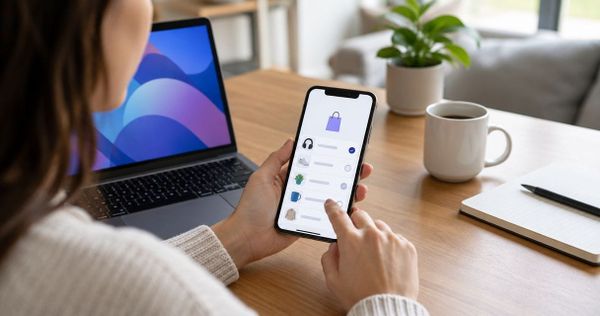
The Future of Online Shopping: What’s Changing in 2026
The future of online shopping in 2026 focuses on universal wishlists and automated price tracking, making comparison, saving, and buying simpler for shoppers.
There’s a familiar kind of frustration in online shopping. You find something you like, open three tabs to compare prices, forget which one had the discount, and then miss the sale entirely. Or you screenshot items for a birthday wishlist, only to lose them somewhere in your camera roll.
That messy, scattered experience is exactly what 2026 is starting to fix.
The future of online shopping is not just faster checkouts or prettier apps. It’s smarter, more connected, and surprisingly personal. And if you’ve been shopping the same way for years, you’re about to notice the difference.
Shopping is becoming less about stores and more about systems
Not long ago, every store tried to keep you inside its ecosystem. Now, the shift is happening in the opposite direction.
People don’t want to browse ten different sites manually. They want one place where everything lives. A place where you can compare, save, and decide without starting over each time.
That’s where tools like LMK.today quietly change the experience. Instead of thinking in terms of stores, you start thinking in terms of your own collection. You can pull items from anywhere and organize them in a way that actually makes sense to you.
This is also why more shoppers are choosing to create online wishlist collections that aren’t tied to a single retailer. It removes friction. It keeps things flexible. And it feels a lot closer to how people actually shop.
Price tracking is replacing constant checking
One of the biggest shifts in 2026 is simple but powerful. People are done refreshing pages to check if prices dropped.
A good price tracker app now does that work in the background. You save an item once, and it watches the price for you. When it drops, you get notified. No effort, no guesswork.
This isn’t just convenient. It changes behavior.
Instead of rushing into purchases, shoppers are more patient. They wait for the right moment. They track prices across stores instead of settling for the first option they see.
If you’ve ever felt that regret after buying something only to see it cheaper a week later, this shift matters. A tool like LMK.today deals tracking makes sure you don’t have to play that guessing game anymore.
Wishlists are becoming social, not private
Wishlists used to be personal. Something you kept to yourself or maybe shared once during the holidays.
Now they’re becoming more dynamic and more social.
People are sharing curated lists for birthdays, weddings, baby showers, and even everyday recommendations. It’s less about asking “what do you want?” and more about showing exactly what fits your style.
That’s why the idea of a free online gift registry is evolving. It’s no longer tied to a single event or store. You can build one that spans multiple shops and actually reflects what you want.
With tools like LMK.today wishlists, sharing becomes effortless. You send one link, and everything is there. No back and forth, no confusion, no duplicate gifts.
Browser extensions are doing the heavy lifting
Another quiet change is happening in the background of your browser.
Instead of copying links or bookmarking products manually, more shoppers are relying on a shopping tool extension for Chrome like the LMK.today extension that captures items instantly.
You see something you like, click once, and it’s saved. No disruption to your flow.
This matters more than it sounds. Because the easier it is to save items, the more intentional your shopping becomes. You’re not just reacting in the moment. You’re building a list, comparing later, and making better decisions.
That’s exactly what makes a tool like LMK.today merchants integration useful. It works across stores without forcing you to change how you browse.
Holiday shopping is becoming less chaotic

If there’s one area where all of these changes come together, it’s holiday shopping.
Black Friday, Christmas, and big sale events used to mean stress. Too many tabs, too many deals, and not enough time to think.
Now, shoppers are preparing earlier and relying on smarter tools.
They build lists in advance, track prices before the sale even starts, and organize gifts through a holiday gift registry instead of juggling notes and messages.
This shift turns what used to be reactive into something more controlled.
You already know what you want. You already know the price range. When the deal shows up, you’re ready.
Browsing LMK.today product collections ahead of time makes that preparation feel natural instead of overwhelming.
The experience is becoming more personal and less transactional
The biggest change in 2026 isn’t technical. It’s behavioral.
People don’t just want to buy things. They want a smoother experience around the entire process.
They want:
- Fewer decisions, not more
- Better timing on purchases
- A clear way to organize what they like
- An easy way to share with others
When all of that comes together, shopping feels less like a chore and more like something intentional.
That’s why platforms like LMK.today are quietly becoming part of how people shop, not just where they shop.
Where this leaves you
You don’t need to completely change how you shop overnight. But small shifts make a difference.
Start saving items instead of leaving tabs open. Try tracking prices instead of guessing. Build a wishlist instead of keeping everything in your head.
The tools are already there. The difference now is how naturally they fit into your routine.
And once you experience a cleaner, more organized way to shop, it’s hard to go back to the old way of doing things.