How to Buy Better Products Without Spending More
How to buy better products without spending more: use wishlists, price tracking, and waiting periods to reduce impulse buys and make smarter purchase decisions.
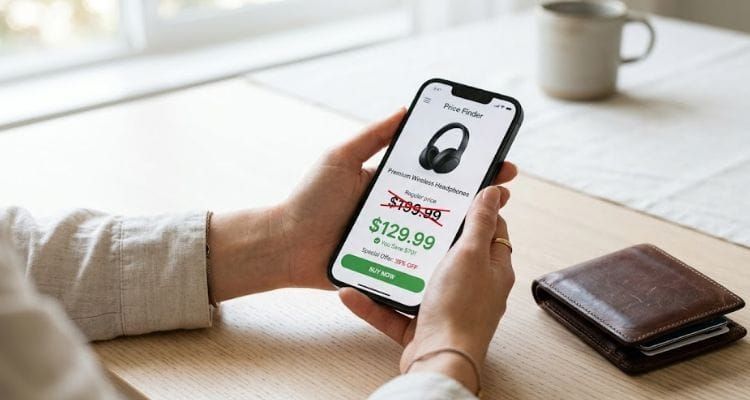
You finally buy the thing. The headphones, the coffee maker, the sneakers you spent three nights comparing. Then two days later, someone casually says, “Oh, that was cheaper last week.”
Now you’re annoyed. Not because you bought something bad, but because shopping online has quietly become a full-time research project.
The internet gave us infinite options. What it didn’t give us was clarity.
That’s why “buying better” today has less to do with spending more money and more to do with making fewer rushed decisions. The smartest shoppers are not necessarily buying luxury products or hunting for impossible discounts. They’re just better at timing, tracking, and filtering out noise.
And honestly, that’s a skill worth learning.
Most people don’t overspend because products are expensive
They overspend because they buy too fast.
Retailers are good at manufacturing urgency. Limited-time sales. “Only 2 left.” Countdown timers that somehow reset the next day anyway.
The result is predictable: impulse purchases that feel smart in the moment and questionable a week later.
One of the easiest ways to break that cycle is to stop treating shopping like a sprint. Build a system instead.
That’s where tools like LMK.today become surprisingly useful. Instead of juggling screenshots, browser tabs, and notes apps, you can create online wishlists from pretty much any store and let products sit there for a while before deciding.
And that waiting period matters more than people think.
When you revisit an item after a few days and still want it, it’s usually a better purchase.
When you completely forget about it, congratulations, you just saved money.
Price tracking quietly changes how you shop
There’s something oddly exhausting about manually checking if a product went on sale.
People do this all the time during holiday shopping seasons. Open tab. Refresh page. Check another retailer. Repeat.
A good price tracker app removes that entire ritual.
Instead of monitoring products yourself, you let the system do it for you. That means you can track prices across stores without spending mental energy refreshing pages every day.
The practical benefit is obvious: you save money.
The less obvious benefit is that you stop panic-buying.
Using the LMK.today deals and tracking tools makes shopping feel calmer because you know you’ll get notified if the price drops. You’re no longer relying on luck or timing.
That shift alone can completely change how you buy tech, home goods, gifts, and even everyday essentials.
Especially during Black Friday season, when prices fluctuate so aggressively they start looking like crypto charts.
Better products usually come from slower decisions

There’s a difference between researching endlessly and shopping thoughtfully.
Thoughtful shoppers tend to ask better questions:
- Will I actually use this six months from now?
- Is this product solving a real problem?
- Am I buying quality or just reacting to marketing?
- Have I compared this across multiple stores?
The best purchases are often boringly intentional.
You don’t need ten browser extensions yelling coupon codes at you. You need one system that helps you organize what you actually want.
That’s partly why lightweight tools work better than cluttered “shopping productivity” apps. The friction stays low.
The LMK.today Chrome extension is a good example of this done right. You see something interesting online, save it instantly, and move on with your day. No spreadsheets. No copy-pasting links into group chats you’ll never reopen.
And yes, it quietly becomes one of those browser tools you stop thinking about because it’s always useful.
Wishlists are underrated financial tools
People think wishlists are just for birthdays or holiday gift registries.
They’re actually one of the simplest ways to spend more intentionally.
A wishlist creates distance between desire and purchase. That tiny pause is powerful.
Instead of buying things impulsively, you collect possibilities first. Over time, patterns emerge. You notice what you genuinely value and what was just temporary internet temptation.
It also helps when other people are buying for you.
A proper holiday gift registry or free online gift registry removes awkward guessing and duplicate gifts. It’s cleaner for everyone involved.
If you’re planning a wedding, birthday, baby shower, or even a housewarming, tools like the LMK.today wishlist finder and registry pages make the whole process less chaotic and much more shareable.
And importantly, you’re not locked into a single retailer.
That flexibility matters because the best version of a product is not always sold in the same place.
The smartest shoppers compare merchants, not just products
A lot of people compare specs but forget to compare sellers.
Same item. Different return policies. Different shipping speeds. Different pricing.
Sometimes wildly different pricing.
Checking merchants sounds tedious until you realize platforms like LMK.today merchant discovery already organize much of that information for you.
This becomes especially useful during high-volume shopping periods like Christmas or Black Friday Cyber Monday sales, when dozens of stores are competing with slightly different offers.
The goal isn’t to become obsessive about saving every dollar.
The goal is to avoid paying more simply because you were rushed.
There’s a difference.
Buying better also means buying less often
This is the part most shopping advice skips.
The cheapest product is not always the best deal. A poorly made item you replace three times costs more than the quality version you buy once.
Good shopping habits eventually push you toward fewer, better purchases.
You stop buying random filler products because you’ve spent enough time figuring out what actually deserves your money.
Ironically, the people who are best at finding deals are often the same people who buy less frequently.
Not because they’re overly frugal, but because they’re more deliberate.
They wait. They compare. They track prices. They save products for later. They revisit decisions with a clearer head.
That’s not extreme budgeting. That’s just modern shopping with slightly more intention.
And in a world built around impulse buying, that’s probably the closest thing we have to a shopping advantage.